By Emma Bavinck, Rikke Pristed, Irene Lindø Christensen, Matthias Hellberg-Naegele, Christina Baiana, Dina El Mouzain, Thomas Jézéquel, Ida Ophorst, Sabine Valenta.
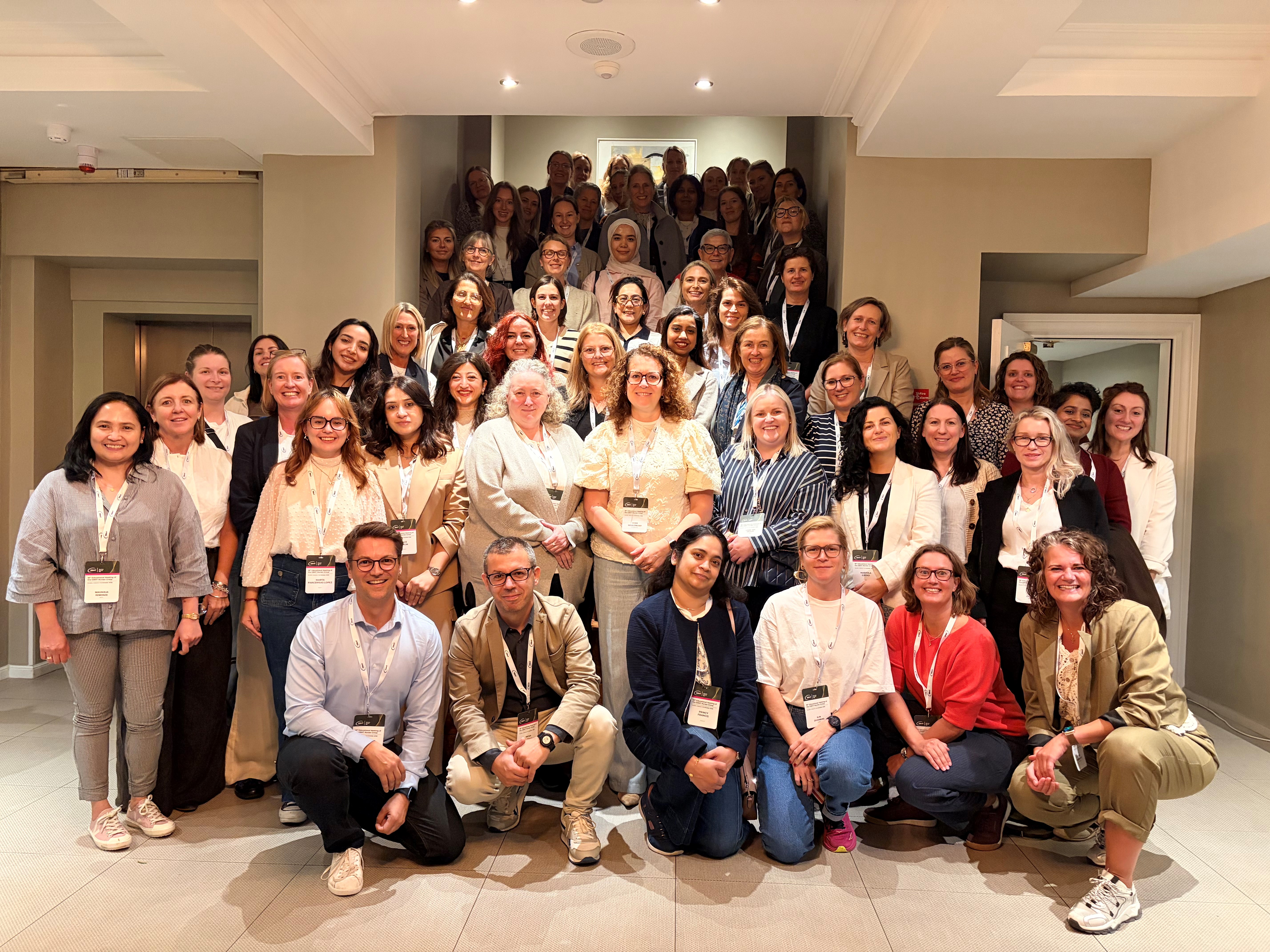
Bringing together 105 participants from 26 countries, the 18th Educational Meeting of the EBMT Nurses Group, held in Dublin, provided a vibrant platform for nurses and allied health professionals to exchange knowledge, explore emerging developments, and discuss the evolving role of nursing in HCT and cellular therapy.
The programme reflected both the rapid scientific advances transforming the field and the central role of nurses in delivering high-quality, patient-centred care. Across a wide range of topics, speakers demonstrated how nursing practice continues to evolve through innovation, research, education and leadership.
Advancing Nursing Practice Through Evidence and Innovation
The meeting highlighted the pivotal role of nurses in delivering evidence-based care that addresses the complex physical, psychosocial, and supportive needs of transplant and cellular therapy recipients. In her presentation, Palliative and Supportive Care in HCT and CT, Michelle Kenyon (UK) presented expert-based recommendations supporting the integration of palliative and supportive care throughout the transplant and cellular therapy pathway. Particular emphasis was placed on early advance care planning and ensuring that care aligns with patients' values and goals.
The importance of supportive care was further explored by Carlotta Cadsky (Germany) in Oral Care Guidelines, which highlighted the role of personalised prevention strategies, patient education and emerging interventions such as cryotherapy and photobiomodulation in improving outcomes.
The psychosocial dimensions of care were addressed in a dedicated session on psychological support. In Understanding and Managing Fear of Cancer Recurrence, Sonya Collier (Ireland) discussed the uncertainty many patients experience after treatment and the importance of helping individuals achieve a healthy balance between vigilance and quality of life. Kathleen McHugh (UK), in Communication and Use of Language, demonstrated how communication approaches such as Comfort Talk® and motivational interviewing can strengthen therapeutic relationships and improve patient experiences. These themes were reinforced by Ajna Džanić's (Croatia) presentation, The Importance of Psychosocial and Hygiene Assessment Prior to Stem Cell Transplantation, which highlighted the value of comprehensive assessments before major treatment milestones.
Together, these presentations underscored an important message: excellent transplantation care extends beyond clinical interventions and requires attention to patients' emotional, psychological and social wellbeing.
The importance of nursing leadership was also visible in discussions on follow-up care. Emma Kane (UK), Ann Galligan (Ireland) and Sabine Valenta (Germany) presented different approaches to long-term post-transplant monitoring, including telephone clinics, shared-care models and structured monitoring programmes. Their presentations highlighted how nurses are helping develop sustainable models of survivorship care while maintaining close attention to patients' individual needs.
The growing impact of advanced nursing practice
The meeting also highlighted the expanding contribution of advanced practice nurses across transplantation and cellular therapy programmes.
In Careers in Advanced Practice, Thomas Jézéquel (France) explored professional development pathways and emphasised that advanced practice nursing represents a distinct role requiring dedicated competencies, recognition and support. Building on this theme, Marie Jones (UK) presented The Role of the Advanced Nurse Practitioner: A Multifaceted Role in Stem Cell Transplantation and Cellular Therapy, illustrating how advanced practitioners contribute to improved patient outcomes and healthcare efficiency trough their roles in clinical care, education, leadership and research.
Bilge Burçin (Belgium), in Optimizing Advanced Practice Nursing Consultation in the Hematopoietic Cell Transplantation Pathway, demonstrated how structured nursing consultations can improve health literacy, patient engagement and preparedness for transplantation.
Innovation shaping the future of transplantation and cellular therapy
Scientific innovation featured prominently throughout the programme. In The Evolving Role of Gene Therapy for Patients with Hemoglobinopathies, Majken Høeg Olsen (Denmark) presented the transformative potential of gene therapy for conditions such as sickle cell disease and thalassaemia, illustrating how novel treatments are creating curative options beyond traditional transplantation approaches.
The rapidly expanding field of cellular therapy was further explored by Ruth Clout (UK) in Outpatient Delivery of CAR T-Cell Therapy, which examined opportunities and challenges associated with delivering treatment beyond traditional inpatient settings. Mairéad Ní Chonghaile (Ireland) complemented this discussion with Geriatric Care Pathways in Cellular Therapy, emphasising the importance of personalised assessments and supportive interventions for older adults undergoing treatment.
Across these presentations, speakers highlighted how nurses play a critical role in translating innovation into practice through patient education, toxicity monitoring, treatment coordination and supportive care.
Supporting patients throughout the transplant and journey
Supporting patients through the challenges of transplantation, chronic complications, and long-term survivorship was a major focus of the meeting.The GVHD session offered practical insights into both established and emerging challenges. Nina Orfali (Ireland), in New Therapies and Management of GvHD, highlighted developments in prevention and treatment strategies. Marta Parcerisas (Spain) examined the complex topic of Organ Transplant After GvHD, while Angela Leather (UK), in Female Genital GvHD: Nursing Care and Quality of Life, addressed an often under-recognised complication with significant implications for patient wellbeing. Musa Dubali (Italy) contributed a clinical case presentation exploring the use of mesenchymal stromal cells in the treatment of severe steroid-refractory acute GvHD.
The paediatric and adolescent programme extended these discussions into longer-term survivorship. Trude Minnee-Guyt (Netherlands) addressed the challenges of transitioning patients from paediatric to adult services, while Cairenn McDonell and Joy Lewis (Ireland) explored supportive approaches for adolescents and young adults throughout the transplant journey. Elin Öfverberg (Sweden) focused on the needs of minor sibling donors, and Emma Bavinck (Ireland) demonstrated how digital tools can empower children undergoing transplantation by facilitating meaningful conversations about wellbeing and quality of life.
Immune recovery and infection prevention following HCT and cellular therapy were explored from complementary clinical and nursing perspectives. Christopher Bacon (Ireland) highlighted the importance of re-vaccination to rebuild immunity and protect patients from infection. Barbara Loconte (Switzerland) emphasised that immune recovery is an individual and dynamic process, requiring both laboratory assessment and careful clinical observation. Stéphanie Schmitt (France) underscored the central role of nurses in monitoring for infection and GvHD, supporting prevention strategies, and empowering patients and families through education and self-management.
From evidence to implementation
A particularly relevant theme throughout the meeting was how evidence can be translated into everyday practice.
In the session Please Mind the Gap: Bridging Research and Practice with Implementation Science, Lynn Leppla (Germany) introduced the principles of implementation science and its role in accelerating the adoption of evidence-based innovations. Sabine Valenta (Germany) shared real-world experiences implementing a symptom management programme for mucositis, while Carlotta Cadsky (Germany) discussed approaches to identifying barriers and selecting tailored implementation strategies.
These presentations reinforced the growing role of nurses not only as consumers of evidence, but also as leaders in quality improvement and practice change.
The meeting also recognised outstanding contributions to nursing through presentations from recipients of the Nurses Group awards at the 52nd Annual Meeting.
Award-winning projects covered a diverse range of topics, including emotional burden following transplantation predicting mortality (Sabine Valenta, Germany), patient and caregiver experiences of adoptive cell therapy, using journey mapping (Nina Canova, Switzerland), safety profiles of anti-thymocyte globulin formulations in paediatric HSCT (Isabel Salcedo, Spain), educational initiatives for transplant nurses in Ukraine during wartime (Oleksandr Istomin, Ukraine), and the development of a paediatric BMT nursing programme in Abu Dhabi (Dina El Mouzain, UAE).
Together, these projects demonstrated the breadth of nursing-led research and its direct contribution to improving patient outcomes, education and service development across diverse healthcare settings.
Looking ahead
The 18th Educational Meeting of the EBMT Nurses Group demonstrated the vital contribution of nurses across every stage of the transplantation and cellular therapy pathway. From supportive care and psychosocial wellbeing to advanced practice, cellular therapies, survivorship and research, the programme highlighted a profession that continues to evolve alongside an increasingly complex clinical landscape.
Above all, the meeting illustrated how nurses are central in shaping the future of transplantation and cellular therapy while maintaining a steadfast focus on what matters most: improving outcomes and quality of life for patients and families.