
Diagnostic Challenge: Neurological Deterioration in a Malnourished Allo-HCT Recipient
Submitted by: Maria Cancio-Solé, Dietician-Nutritionist
Physician expert perspective: María Queralt Salas, Camilo Pineda-Ibarra, María Suárez-Lledó and Francesc Fernández-Avilés
Nutritional expert perspective: Maria Cancio-Solé and Carla Mestre-Reina
Hospital Clínic de Barcelona, Spain
Clinical Case Summary
A 47-year-old woman with B-cell acute lymphoblastic leukemia, BCR::ABL1 negative, underwent an HLA-identical sibling allogeneic hematopoietic cell transplantation (allo-HCT) in April 2024. Conditioning consisted of fludarabine and 12 Gy total body irradiation, with post-transplant cyclophosphamide-based GVHD prophylaxis. Early complications included grade 2 oral mucositis requiring parenteral nutrition, Campylobacter-associated diarrhea, and grade 2 acute gastrointestinal and grade 1 cutaneous GVHD (MAGIC 3).
During follow-up, she developed persistent dysgeusia, xerostomia, abdominal discomfort, intermittent diarrhea, nausea, and recurrent vomiting, resulting in progressively reduced oral intake. Despite nutritional counseling and oral supplementation, her weight decreased from 65 kg to 44.6 kg six months after transplantation (31% reduction).
Seven months after allo-HCT, she was readmitted with prominent anterograde amnesia, characterized by an inability to retain recent information and repetitive questioning, preceded by gait instability. Her family reported persistent vomiting and minimal oral intake over the preceding 3-4 weeks. Neurological examination revealed bilateral horizontal nystagmus without other focal neurological deficits. Physical examination revealed severe cachexia and malnutrition, without fever.
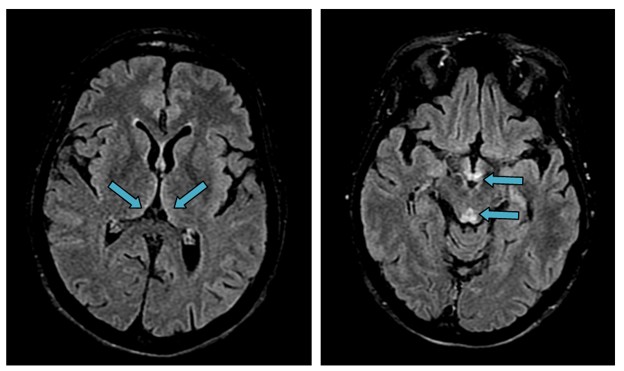
Brain CT was unremarkable. Magnetic resonance imaging (MRI) revealed abnormalities involving the mesencephalon and mammillary bodies, with preservation of the caudate nuclei (Figure 1). Cerebrospinal fluid (CSF) analysis showed normal glucose and protein levels, with mild lymphocytic pleocytosis (15 lymphocytes/µL and 1 macrophage/µL). Subsequently, upper gastrointestinal endoscopy identified gastrointestinal infection by HHV-6.
Laboratory studies showed no systemic inflammation, metabolic disturbances, or major organ dysfunction. Mild anemia (hemoglobin 11.2 g/dL) and thrombocytopenia (126×10⁹/L) were present. Micronutrient assessment revealed severe thiamine deficiency (vitamin B1, 2.6 ng/mL) and vitamin C deficiency.
Question
Which of the following is the most likely diagnosis?
- Central nervous system relapse of acute lymphoblastic leukemia
- HHV-6-associated encephalitis
- Sirolimus-associated posterior reversible encephalopathy syndrome
- Wernicke encephalopathy secondary to severe thiamine deficiency
- Fludarabine-associated encephalopathy
Haematologist Perspective by M. Queralt Salas and María Suárez-Lledó
Neurological complications following allo-HCT represent a major diagnostic challenge because infectious, inflammatory, metabolic, and treatment-related etiologies may coexist. This case highlights an uncommon but potentially reversible cause of neurological dysfunction: Wernicke encephalopathy resulting from severe thiamine deficiency in the setting of prolonged post-transplant malnutrition.
The patient developed progressive gastrointestinal symptoms during the months following transplantation. Dysgeusia, xerostomia, nausea, recurrent vomiting, intermittent diarrhea, and abdominal discomfort collectively resulted in sustained inadequate nutritional intake and profound nutritional deterioration. Despite repeated nutritional interventions, the marked weight loss represented an important warning sign and should have prompted a comprehensive nutritional and metabolic evaluation.
Neurological manifestations raised a broad differential diagnosis. Dizziness, gait instability, imbalance and cognitive slowing are relatively common symptoms after transplantation and may reflect medication toxicity, central nervous system infections, electrolyte disturbances, cerebrovascular complications, or disease relapse. In this complex clinical setting, nutritional deficiencies may be overlooked, particularly when gastrointestinal symptoms have persisted for several months. Consequently, the diagnosis of Wernicke encephalopathy is frequently delayed.
Wernicke encephalopathy is an acute neurological syndrome caused by thiamine (vitamin B1) deficiency. Thiamine is an essential cofactor for several enzymes involved in cerebral glucose metabolism and mitochondrial energy production. Its deficiency impairs oxidative metabolism, promotes lactate accumulation, and leads to selective neuronal injury, particularly in metabolically active brain regions.
Classically, Wernicke encephalopathy is characterized by the triad of altered mental status, gait instability, and oculomotor abnormalities. However, the complete triad is present in only a minority of patients, and its absence should not exclude the diagnosis. In this patient, progressive gait instability, prominent anterograde amnesia and bilateral horizontal nystagmus, together with profound nutritional depletion, were suggestive of the syndrome.
Although traditionally associated with chronic alcohol consumption, Wernicke encephalopathy is increasingly recognized in non-alcoholic populations, including patients with hematological malignancies and recipients of hematopoietic cell transplantation. Established risk factors include prolonged vomiting, severe malnutrition, chronic diarrhea, gastrointestinal malabsorption, and prolonged inadequate dietary intake. Transplant recipients are particularly vulnerable because several of these factors may occur simultaneously and persist beyond the initial hospitalization.
Brain MRI can provide important diagnostic support, particularly when clinical manifestations are incomplete or nonspecific. Characteristic findings include bilateral symmetric T2/FLAIR hyperintensities involving the medial thalami, mammillary bodies, and periaqueductal gray matter. However, MRI sensitivity is limited, and normal imaging does not exclude the diagnosis. In this case, the characteristic MRI abnormalities, together with the neurological manifestations and severe nutritional deterioration, strongly supported the diagnosis of Wernicke encephalopathy.
Further investigations demonstrated profound thiamine deficiency (vitamin B1, 2.6 ng/mL) and severe vitamin C deficiency, providing biochemical confirmation of substantial micronutrient depletion. Upper gastrointestinal endoscopy also identified HHV-6 gastrointestinal infection, which may have contributed to persistent gastrointestinal symptoms and impaired nutritional recovery. The coexistence of multiple vitamin deficiencies suggested generalized micronutrient depletion rather than an isolated deficiency.
Measurement of circulating thiamine levels can support the diagnosis, although laboratory confirmation should never delay treatment when Wernicke encephalopathy is clinically suspected. Immediate parenteral thiamine replacement is essential because delayed treatment may result in irreversible neurological injury, including persistent cognitive impairment and Korsakoff syndrome. Intravenous administration is preferred initially, particularly in patients with vomiting, malabsorption, or severe nutritional compromise. Thiamine should be administered before or alongside carbohydrate-containing nutritional support, with correction of associated electrolyte abnormalities, particularly magnesium deficiency. Simultaneously, the underlying causes of malnutrition must be addressed through individualized nutritional support and treatment of gastrointestinal complications.
The patient demonstrated rapid neurological improvement following thiamine replacement, additional vitamin supplementation, nutritional optimization, and antiviral treatment directed against HHV-6 gastrointestinal disease with foscarnet. This favorable clinical response further supported the diagnosis of Wernicke encephalopathy.
This case illustrates several important lessons for transplant physicians. First, nutritional deterioration may develop progressively after discharge, even in patients who have successfully overcome the acute complications of transplantation. Second, substantial weight loss should never be regarded as an inevitable consequence of allo-HCT and requires prompt investigation. Third, micronutrient deficiencies should be systematically considered when neurological symptoms coexist with prolonged gastrointestinal dysfunction or severe weight loss. Finally, early recognition and empiric thiamine replacement are critical, as Wernicke encephalopathy represents a potentially preventable cause of permanent neurological disability after allo-HCT.
Expert Dietitian Perspective by Maria Cancio-Solé and Carla Mestre-Reina
This case highlights the importance of continuous nutritional surveillance throughout the entire allo-HCT trajectory, extending well beyond the initial transplant hospitalization. Although the patient overcame several early transplant-related complications, persistent gastrointestinal symptoms progressively compromised oral intake, ultimately resulting in severe malnutrition and multiple micronutrient deficiencies.
Nutritional care after allo-HCT traditionally focuses on acute complications occurring during hospitalization, such as mucositis, gastrointestinal toxicity, infections, and the need for temporary artificial nutrition support. However, nutritional recovery does not necessarily parallel hematological recovery, and many patients continue to experience symptoms that compromise adequate dietary intake after discharge. Longitudinal nutritional assessment is therefore essential, particularly in patients with persistent gastrointestinal complications or ongoing weight loss.
A key feature of this case was the progressive accumulation of factors negatively affecting food intake. Dysgeusia, xerostomia, gastrointestinal discomfort, nausea, vomiting, diarrhea, and early satiety are common after transplantation and frequently coexist. Although each symptom may appear manageable individually, their combined and sustained impact can lead to profound energy and protein deficits. In this patient, nutritional deterioration progressed despite dietary counselling and oral nutritional supplementation, highlighting the importance of regularly reassessing the effectiveness of nutritional interventions rather than assuming that their prescription alone is sufficient.
Notably, the 31% weight loss observed in this patient represented a critical indicator of nutritional risk that warranted early intensification of nutritional support. In transplant recipients, conventional biochemical markers may not accurately reflect the severity of nutritional depletion, particularly in the presence of inflammation or infection. Consequently, nutritional monitoring should incorporate serial body weight measurements, percentage weight loss, dietary intake assessment, gastrointestinal symptom evaluation, and whenever feasible, body composition and functional parameters such as muscle strength and physical performance.
This case also illustrates the importance of identifying psychological and behavioural barriers to adequate food intake. The patient progressively developed food avoidance because of anticipated vomiting and poor gastrointestinal tolerance. Such experiences may perpetuate inadequate intake even when nutritional recommendations are provided and gastrointestinal symptoms begin to improve.
An important learning point relates to the risk of refeeding syndrome. Oral nutritional supplements were initiated because of the patient's very poor intake; however, the extent of her nutritional depletion and profound thiamine deficiency were not initially recognized. In severely malnourished patients, the introduction of carbohydrate-containing nutritional support may increase thiamine requirements and precipitate metabolic and neurological complications. Therefore, prophylactic thiamine supplementation should be considered before initiating or intensifying nutritional support in high-risk patients, together with close monitoring of electrolytes and clinical status.
From a dietetic perspective, this case also emphasizes the risk of micronutrient deficiencies in patients with prolonged inadequate intake, persistent vomiting, diarrhea, or severe weight loss. Although universal screening for all micronutrients is not routinely indicated, targeted assessment and prophylactic thiamine supplementation should be considered in high-risk patients. Particular attention should be paid to thiamine deficiency, given its potentially severe neurological consequences and the availability of safe, inexpensive, and effective replacement therapy.
Finally, this case reinforces the importance of multidisciplinary collaboration involving transplant physicians, dietitians, nurses, pharmacists, patients, and caregivers. A structured nutritional follow-up pathway may facilitate earlier identification of patients at risk and prevent severe nutritional complications. The objective should not only be to treat established malnutrition, but also to prevent its progression through proactive monitoring, early symptom management, and individualized support throughout post-transplant recovery.
References
- Ota Y, Capizzano AA, Moritani T, Naganawa S, Kurokawa R, Srinivasan A. Comprehensive review of Wernicke encephalopathy: pathophysiology, clinical symptoms and imaging findings. Jpn J Radiol. 2020 Sep;38(9):809-820. doi: 10.1007/s11604-020-00989-3. Epub 2020 May 10. PMID: 32390125.
- Isenberg-Grzeda E, Rahane S, DeRosa AP, Ellis J, Nicolson SE. Wernicke-Korsakoff syndrome in patients with cancer: a systematic review. Lancet Oncol. 2016 Apr;17(4):e142-e148. doi: 10.1016/S1470-2045(16)00037-1. Epub 2016 Mar 29. PMID: 27300674.
- Arends J, Bachmann P, Baracos V, Barthelemy N, Bertz H, Bozzetti F, Fearon K, Hütterer E, Isenring E, Kaasa S, Krznaric Z, Laird B, Larsson M, Laviano A, Mühlebach S, Muscaritoli M, Oldervoll L, Ravasco P, Solheim T, Strasser F, de van der Schueren M, Preiser JC. ESPEN guidelines on nutrition in cancer patients. Clin Nutr. 2017 Feb;36(1):11-48. doi: 10.1016/j.clnu.2016.07.015. Epub 2016 Aug 6. PMID: 27637832.
- Carreras E, Dufour C, Mohty M, Kröger N, editors. The EBMT Handbook: Hematopoietic Stem Cell Transplantation and Cellular Therapies [Internet]. 7th ed. Cham (CH): Springer; 2019. PMID: 32091673.
- Paviglianiti A, Sanchis MB, Peña M, Martínez IP, Peña-Muñoz F, Hurtado L, Gil RL, Mussetti A, Arnan M, Pomares H, Barca EG, López P, Strollo R, Pozzilli P, Sureda A. Assessing the impact of nutritional status at allogeneic stem cell transplantation on clinical outcomes. Support Care Cancer. 2026 Jun 11;34(7):645. doi: 10.1007/s00520-026-10874-w. PMID: 42277329.
Future Clinical Case of the Month
If you have a suggestion for future clinical case to feature, please contact Guillermo Ortí