The EBMT Paediatric Nursing Committee aims to facilitate connections with paediatric nurses across Europe. We would like to provide you with the opportunity to share practices and knowledge in an approachable manner by organizing an online meeting session three times a year, named 'How do you do it...'.
Our online meetings are designed to be highly interactive, providing a dynamic platform for participants to actively engage and share their valuable insights. We encourage open discussions and the exchange of real-world experiences to foster a collaborative learning environment.
EBMT Paediatric Nursing Committee
Objectives
-
Empower nurses through the promotion of collaboration between centers, fostering networking opportunities for enhanced professional development.
-
Compare nursing practices across Europe with the goal of identifying similarities and differences, thus promoting a better understanding of various approaches to care while working towards greater standardization of guidelines.
Upcoming Online Meeting
“How do you do it…”
The next session will take place on the 10th of November from 15:00 to 16:00 CET.
This meeting will focus on Follow up and transition after paediatric HCT.
Register here!
Topics
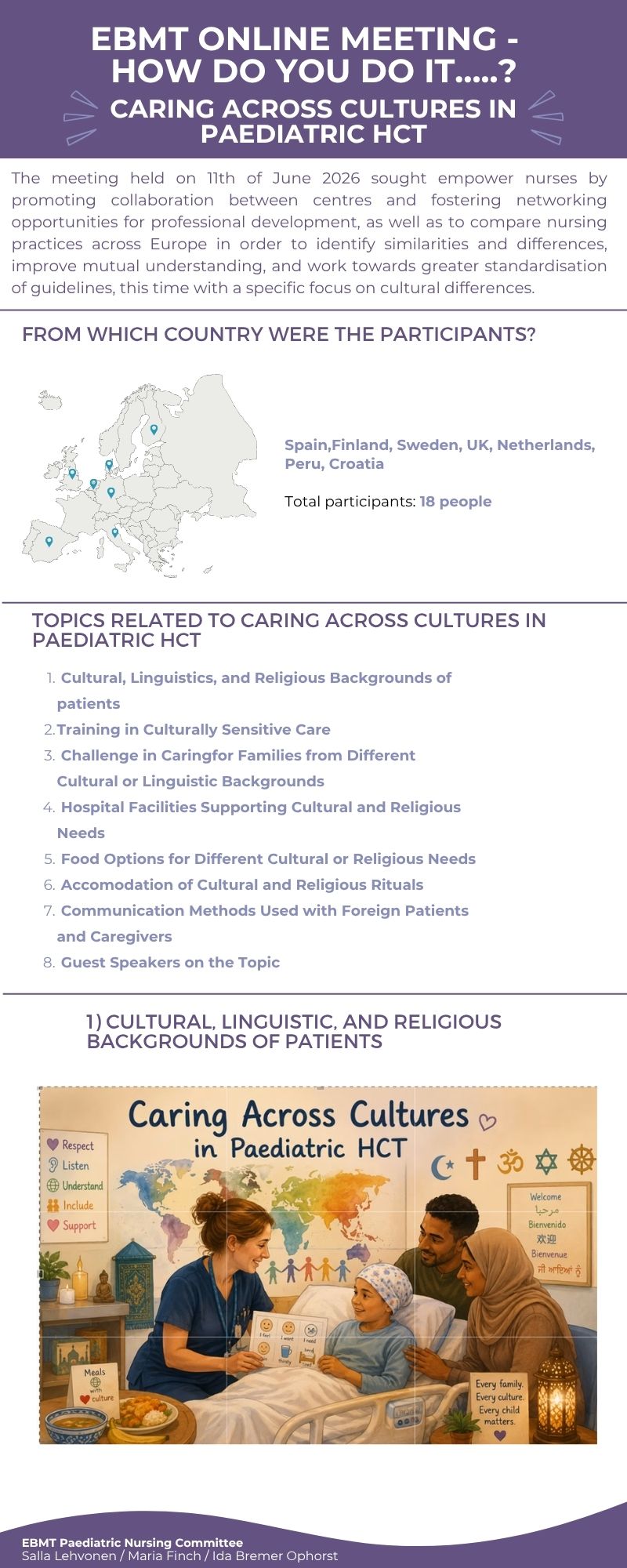
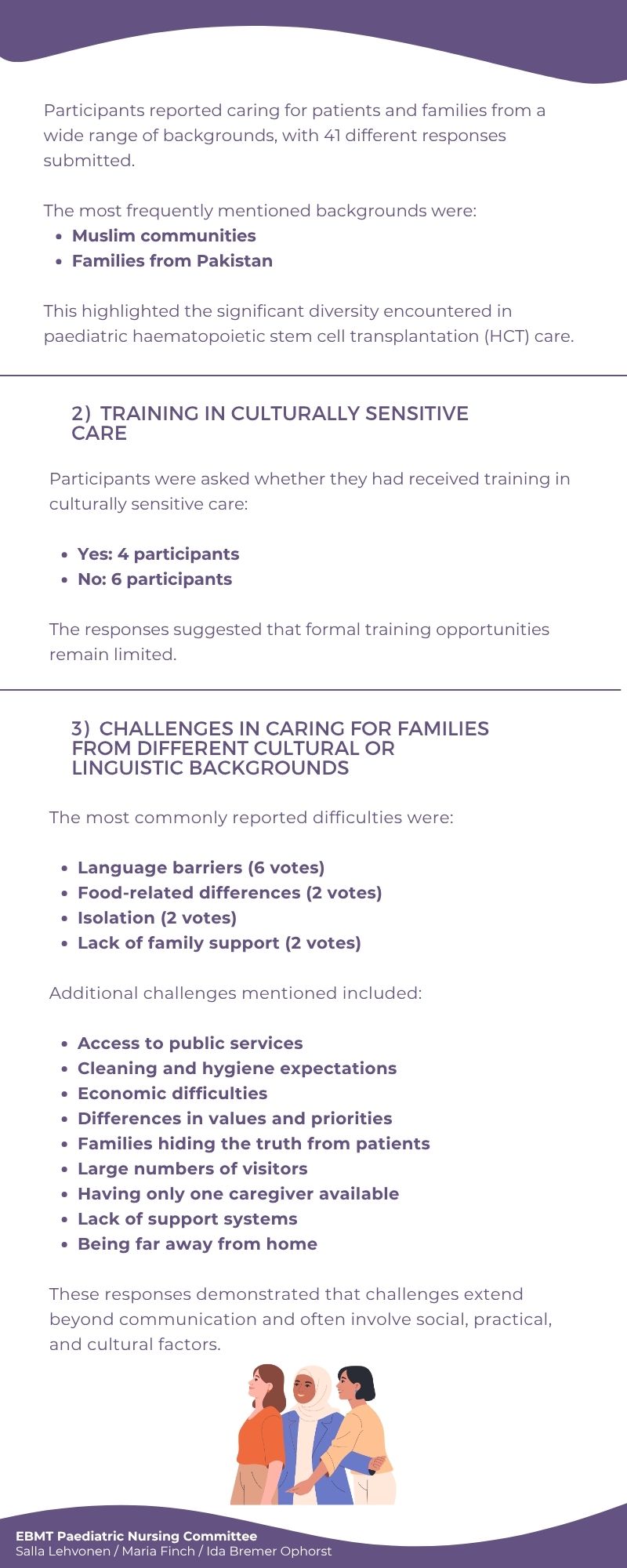
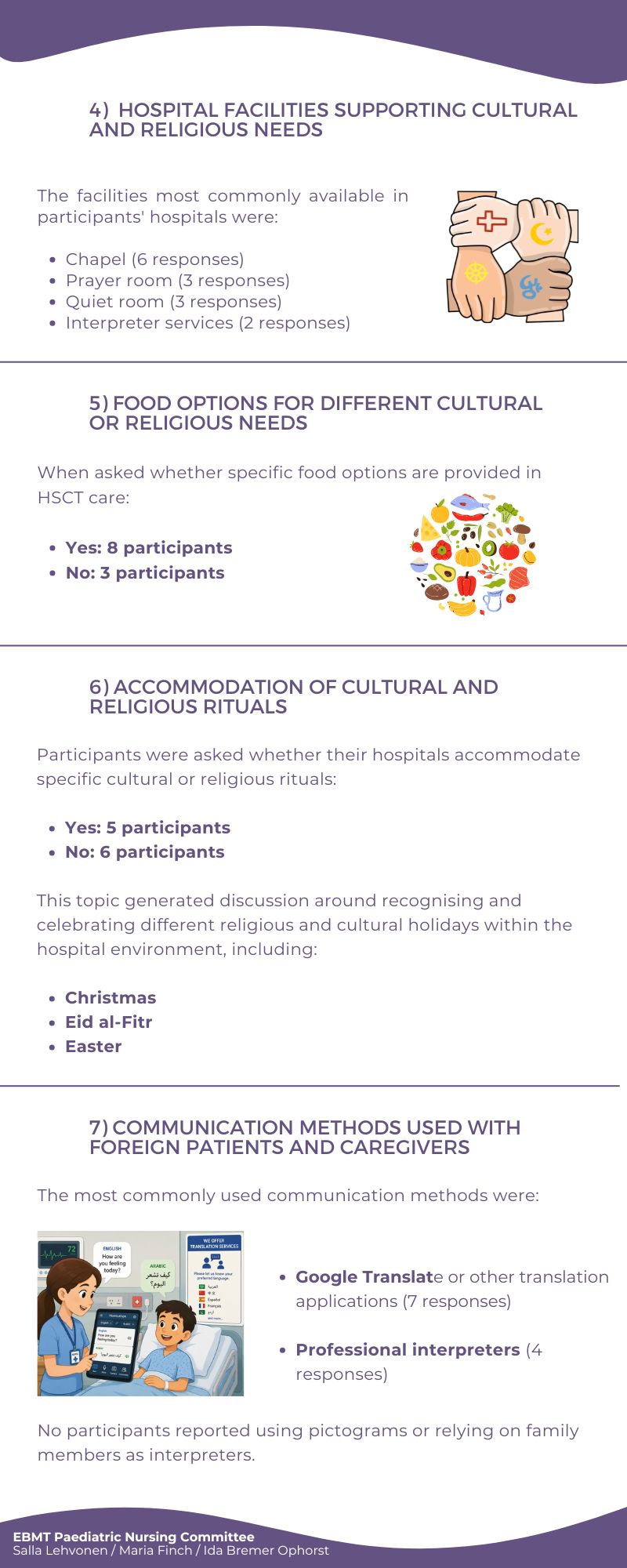
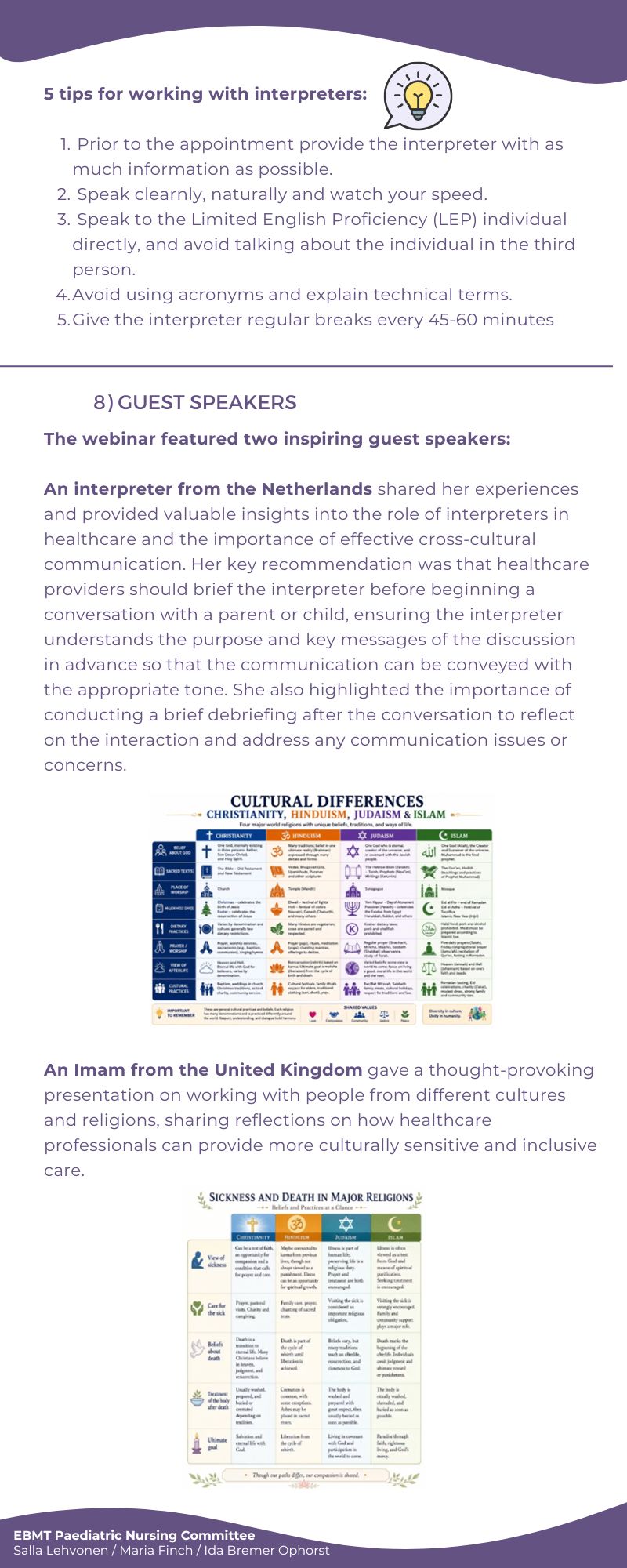
“How do you do it…” - Caring Across Cultures in Paediatric HCT
The webinar, held on 11 June, brought together 18 participants from multiple countries to explore how to provide culturally responsive care for families from diverse backgrounds. The session offered practical insights and strategies, empowering participants to apply what they learned in their own settings. It also created a valuable opportunity to connect with peers, exchange experiences, and share ideas across different contexts.
View the webinar recap and infographic to learn more about the key discussions, insights, and takeaways from the session.
Related topics on Caring across cultures:
- Cultural, Linguistics, and Religious Backgrounds of patients
- Training in Culturally Sensitive Care
- Challenge in Caringfor Families from Different Cultural or Linguistic Backgrounds
- Hospital Facilities Supporting Cultural and Religious Needs
- Food Options for Different Cultural or Religious Needs
- Accomodation of Cultural and Religious Rituals
- Communication Methods Used with Foreign Patients and Caregivers
- Guest Speakers on the Topic
Here you can view the meeting summary
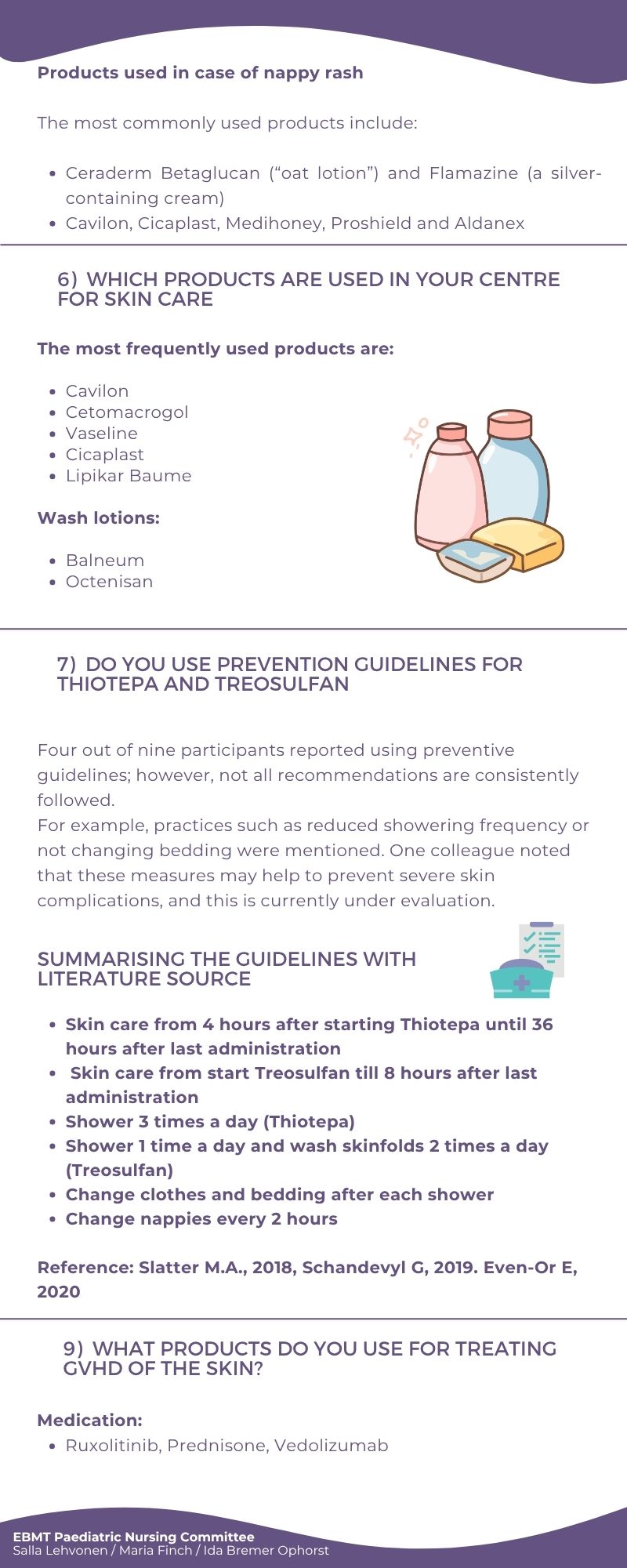
“How do you do it…” - Skin Care
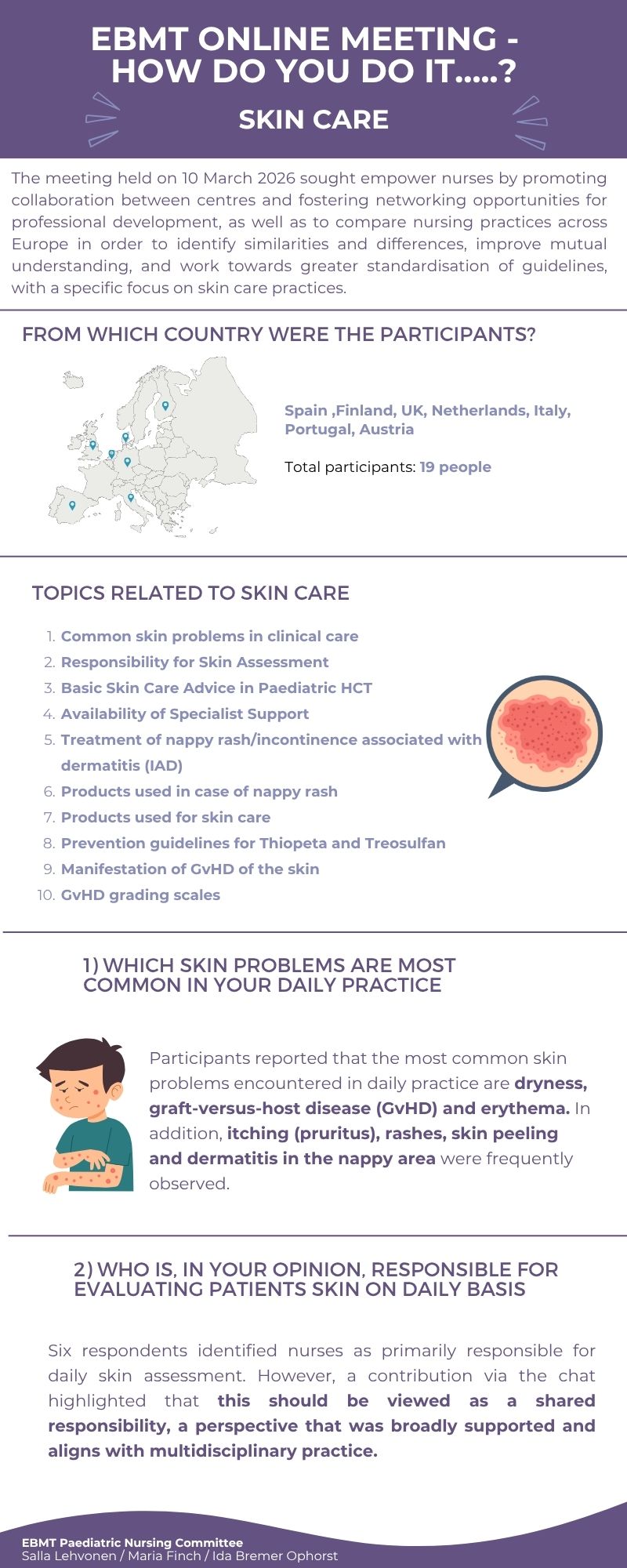
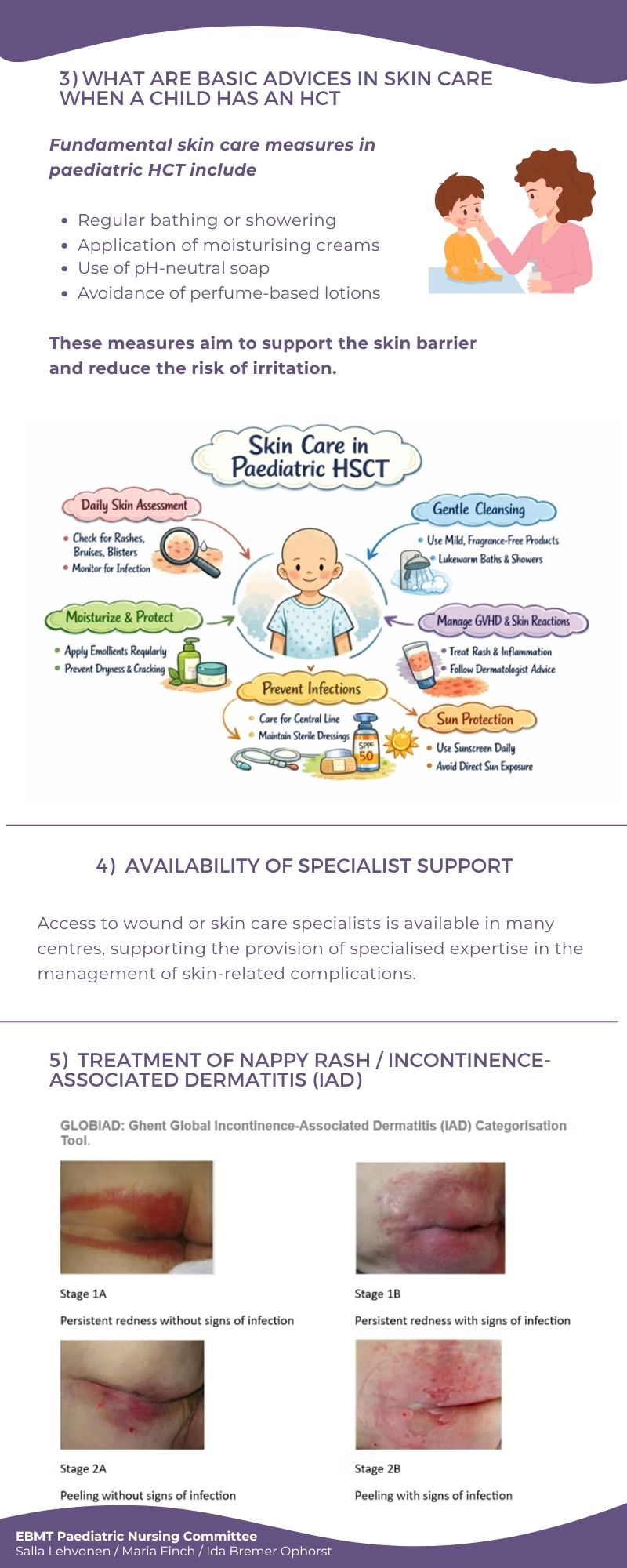
The meeting held on 10 March 2026 sought empower nurses by promoting collaboration between centres and fostering networking opportunities for professional development, as well as to compare nursing practices across Europe in order to identify similarities and differences, improve mutual understanding, and work towards greater standardisation of guidelines, with a specific focus on skin care practices.
Related topics on skin care:
- Common skin problems in clinical care
- Responsibility for Skin Assessment
- Basic Skin Care Advice in Paediatric HCT
- Availability of Specialist Support
- Treatment of nappy rash/incontinence associated with dermatitis (IAD)
- Products used in case of nappy rash
- Products used for skin care
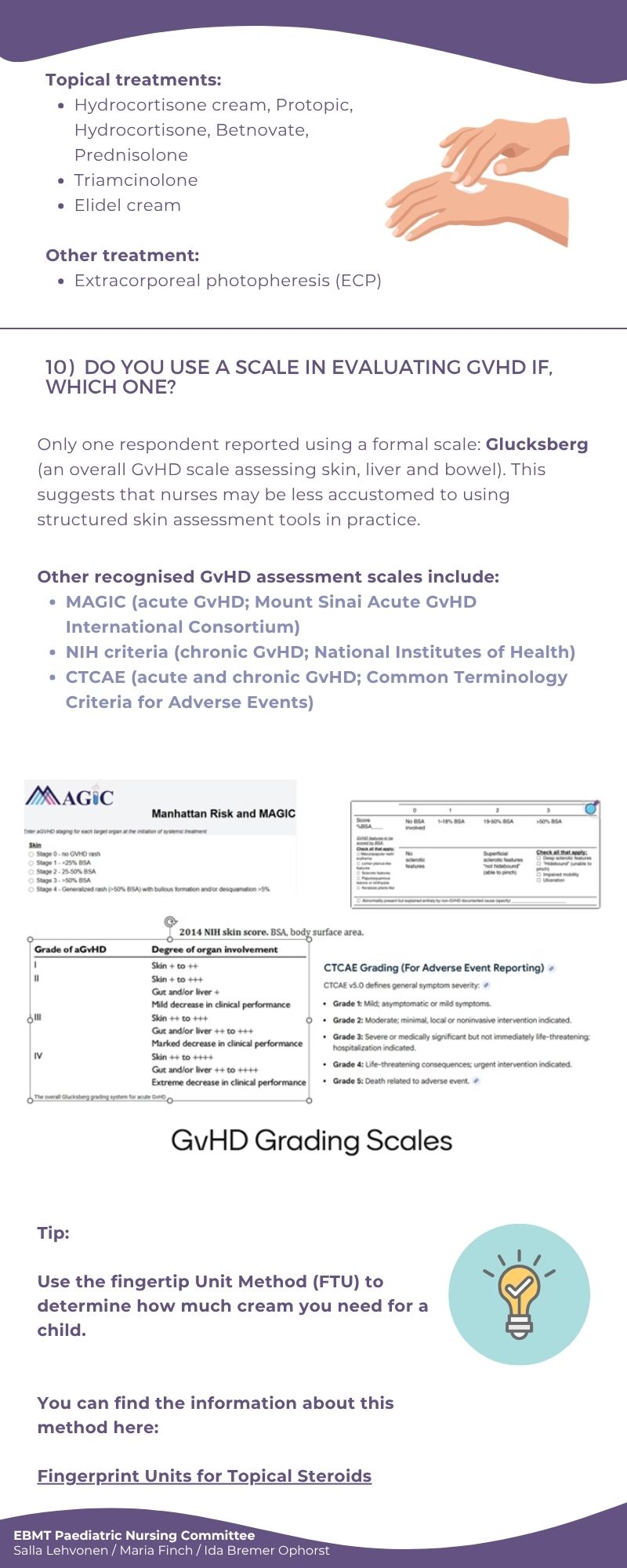
- Prevention guidelines for Thiopeta and Treosulfan
- Manifestation of GvHD of the skin
- GvHD grading scales
Here you can view the meeting summary with some conclusions:
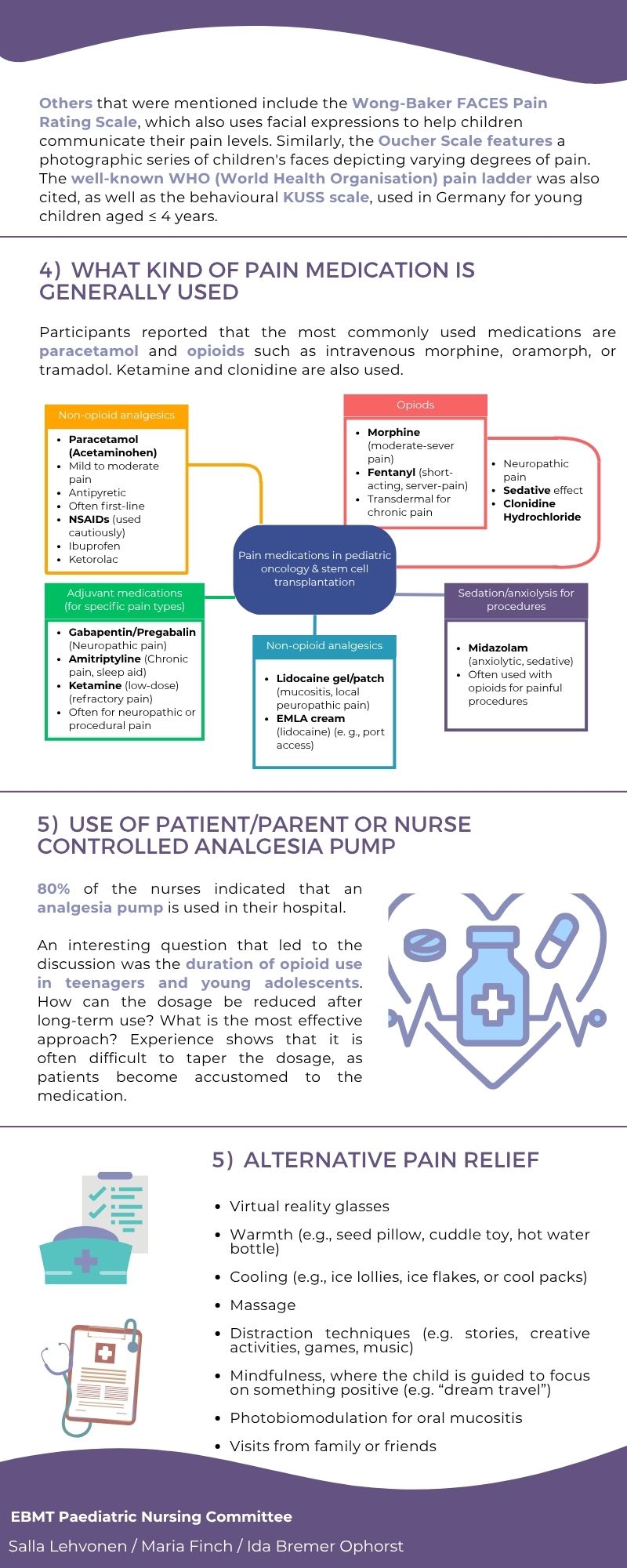
Pain Management in HCT Care
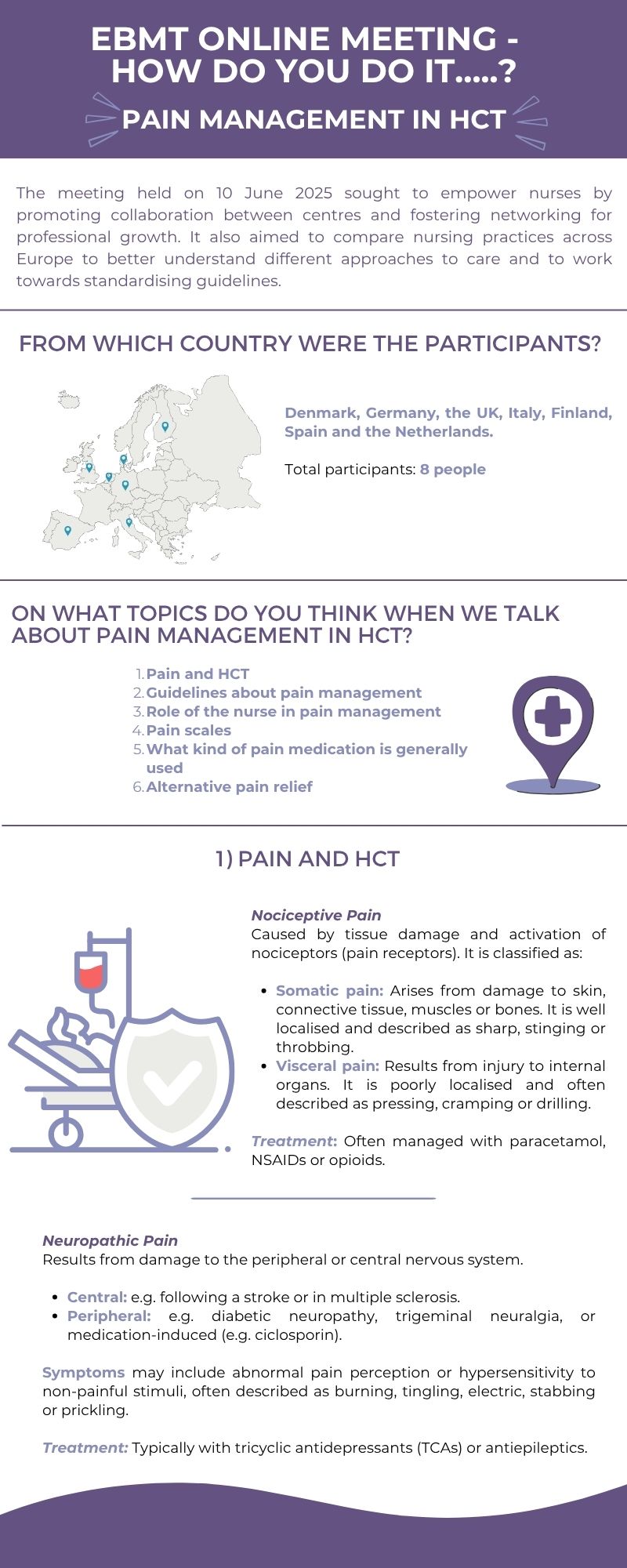
This nurses' meeting, held on 10 June 2025, brought together eight attendees from countries including Denmark, Germany, the UK, Italy, Finland, Spain and the Netherlands. Participants felt empowered by the opportunity to establish collaborations between centres and to connect with new colleagues. View the meeting recap and infographic to explore diverse nursing practices across Europe and the ongoing efforts in pain management in HCT.
Related topics to pain management in HCT:
1.Pain and HCT
2.Guidelines about pain management
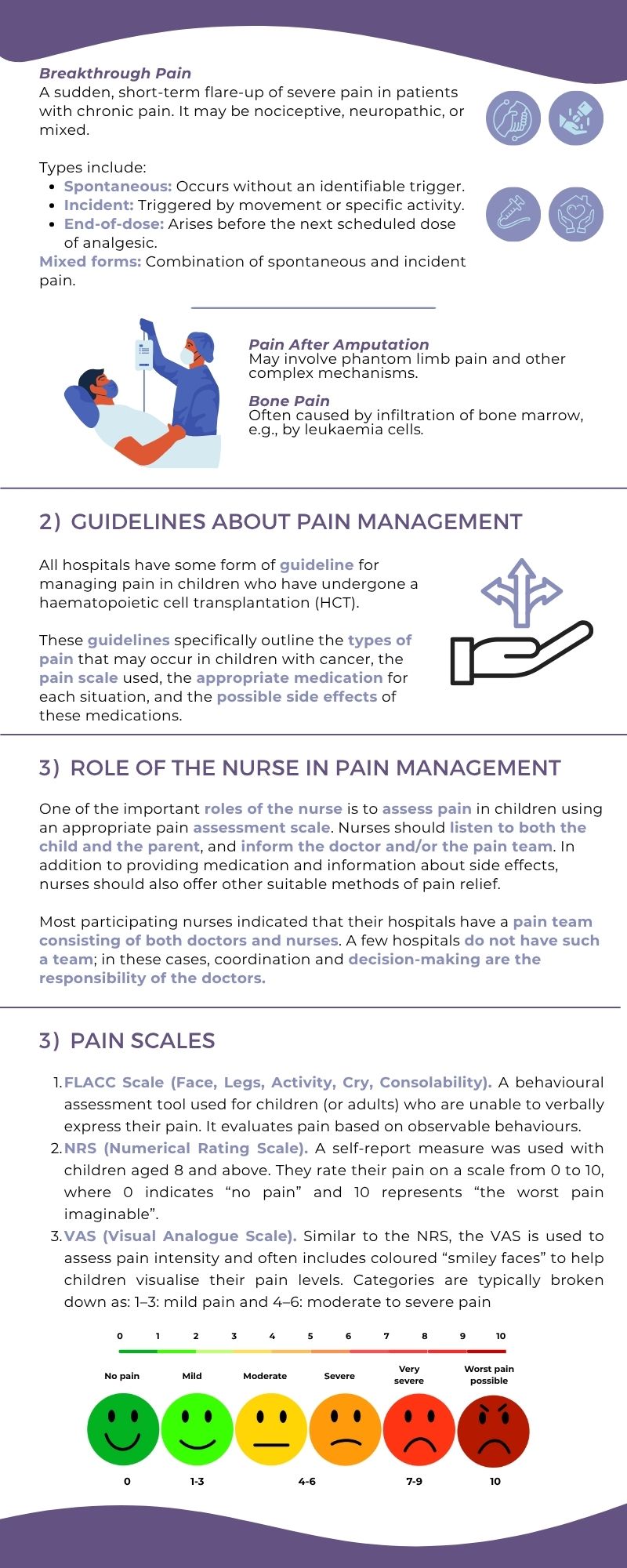
3.Role of the nurse in pain management
4.Pain scales
5.What kind of pain medication is generally
used
6.Alternative pain relief
Here you can see a meeting summary with the main conclusions:
Central Line Care
This nurses' meeting, held on 15 October 2024, united 24 attendees from countries including: Belgium, Brazil, Canada, Denmark, Ecuador, Egypt, Finland, Germany, Greece, India, Iraq, Israel, Italy, Morocco, Netherlands, Qatar, Slovakia, Spain, Sri Lanka, Sweden, United Arab Emirates. Attendees felt empowered after being able to create collaborations between centres and network with new colleagues. See the meeting recap and infographic to learn about the various nursing practices across Europe and the ongoing work towards standardising guidelines for Central Line Care.
Related topics to central line care:
1. What type of central line is mostly used and what are the main challenges of care of a central line
2. How often to change the plaster of a central line
3. Protocol regarding closure of a central line
4. Who inserts a central line
5. Discharge of children with a central line & blood samples
Here you can see a meeting summary with the main conclusions: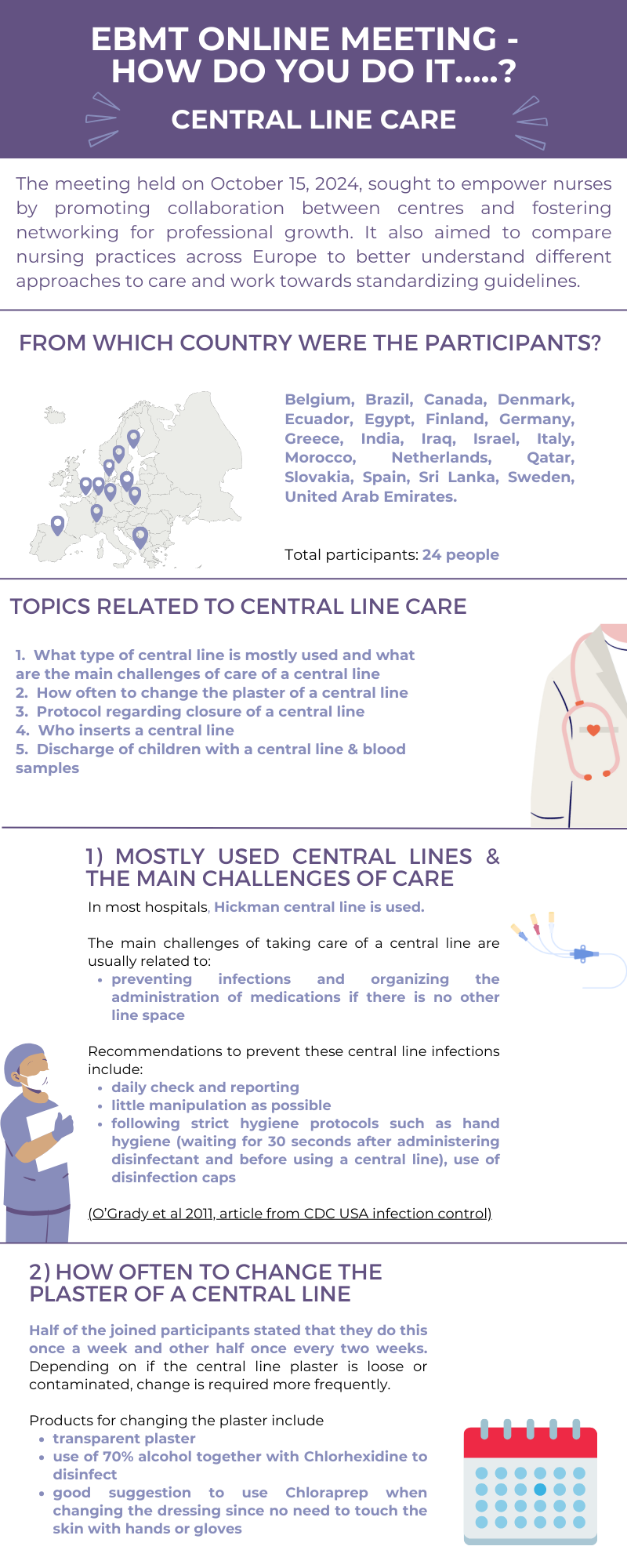
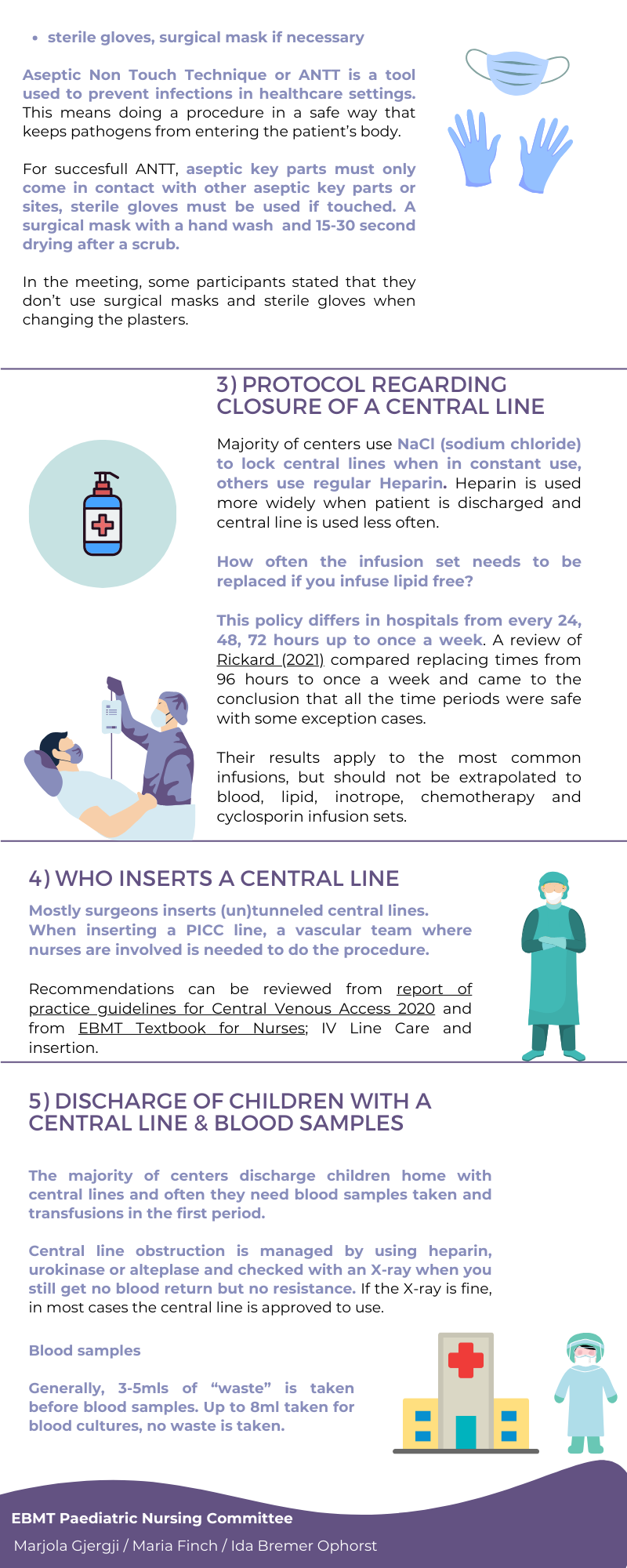
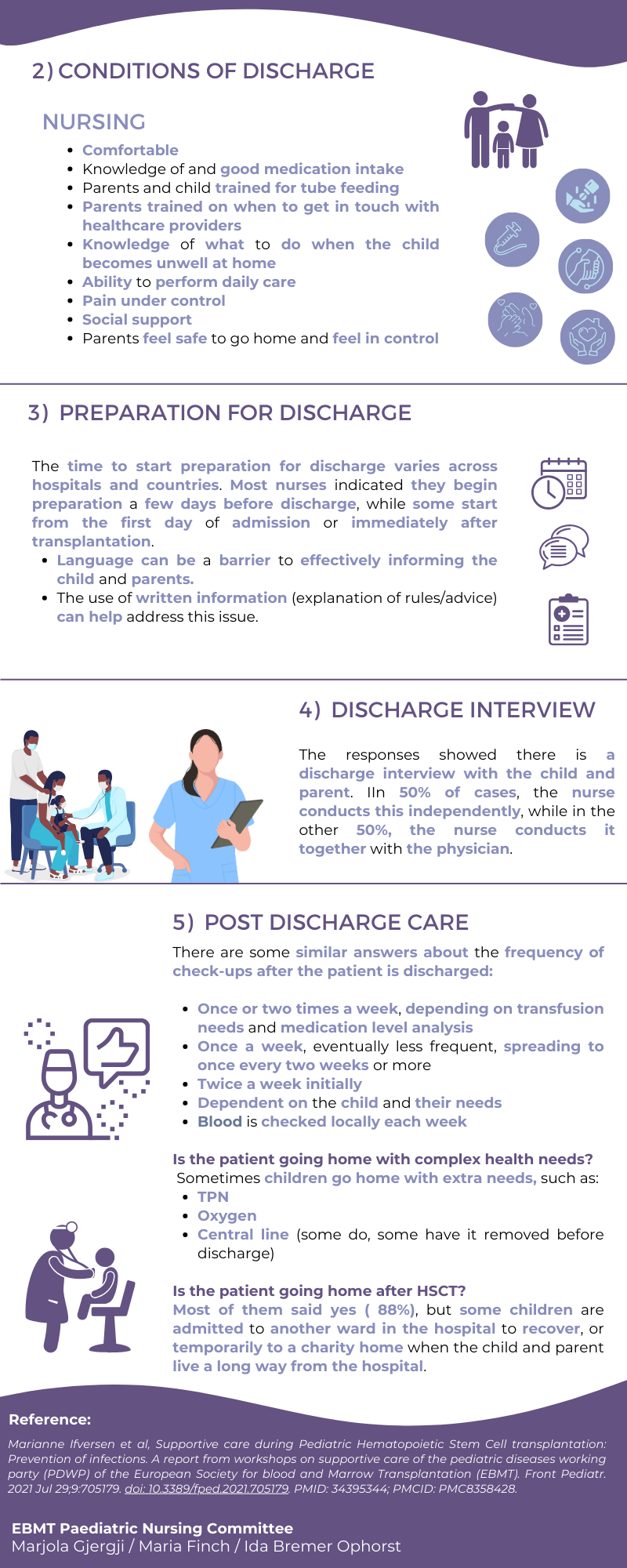
Discharge after HSCT
The meeting, held on 6th June 2024, convened 22 attendees from various countries, including the UK, Italy, Belgium, the Netherlands, Israel, Iraq, Spain, and the United Arab Emirates (UAE). Its purpose was to empower nurses by fostering collaboration between centres and encouraging networking for professional development. Additionally, it aimed to facilitate a comparative analysis of nursing practices across Europe, with the goal of understanding diverse approaches to care and working towards standardising guidelines for discharge after HSCT.
The topics discussed regarding isolation rules were:
- Discharge guidelines
- Conditions of discharge from a medical and nursing perspective
- Preparation for discharge
- Discharge Interview
- Post discharge care
Here you can see a meeting summary with the main conclusions:
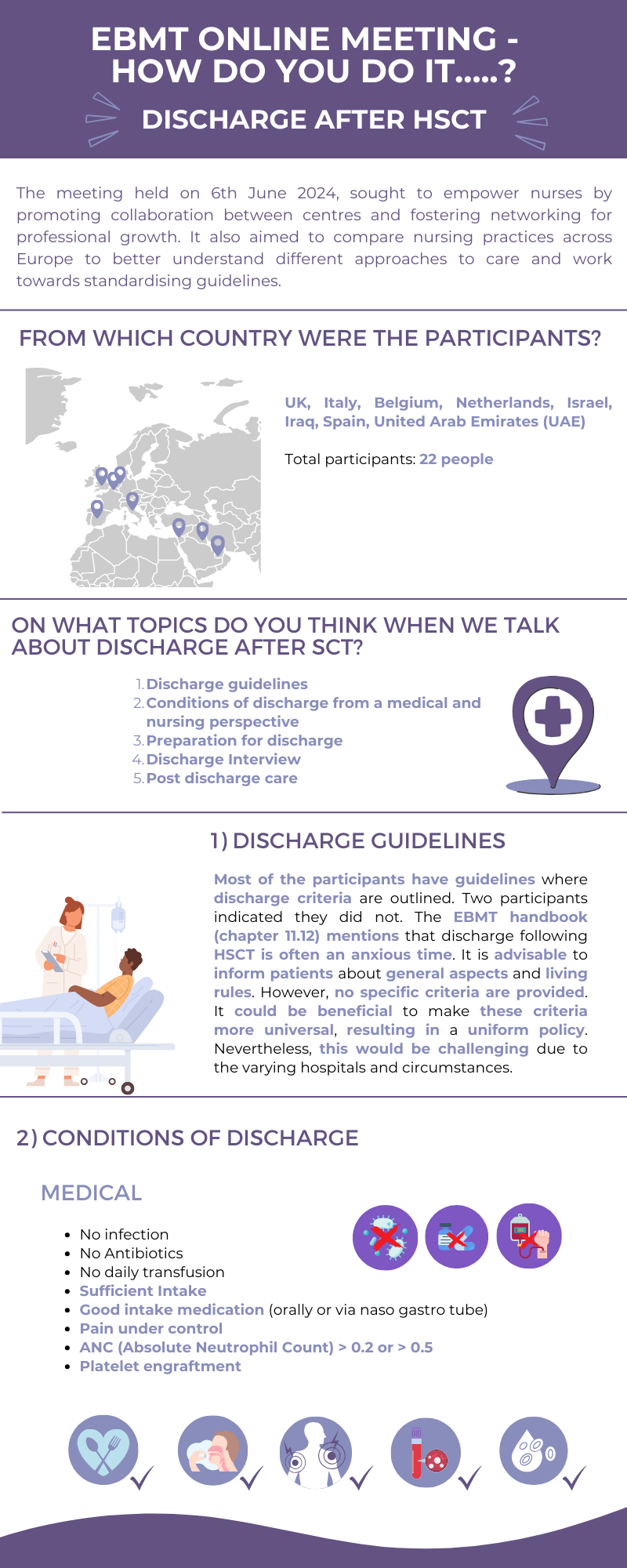
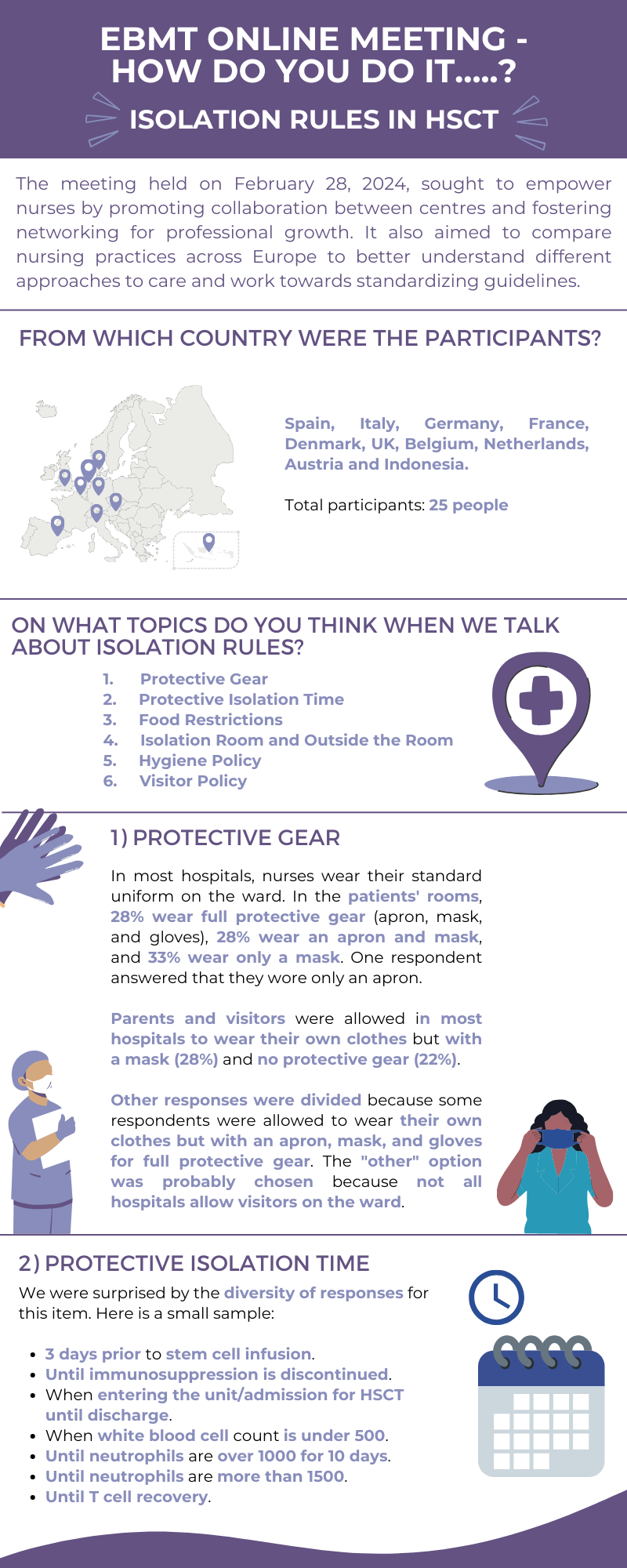
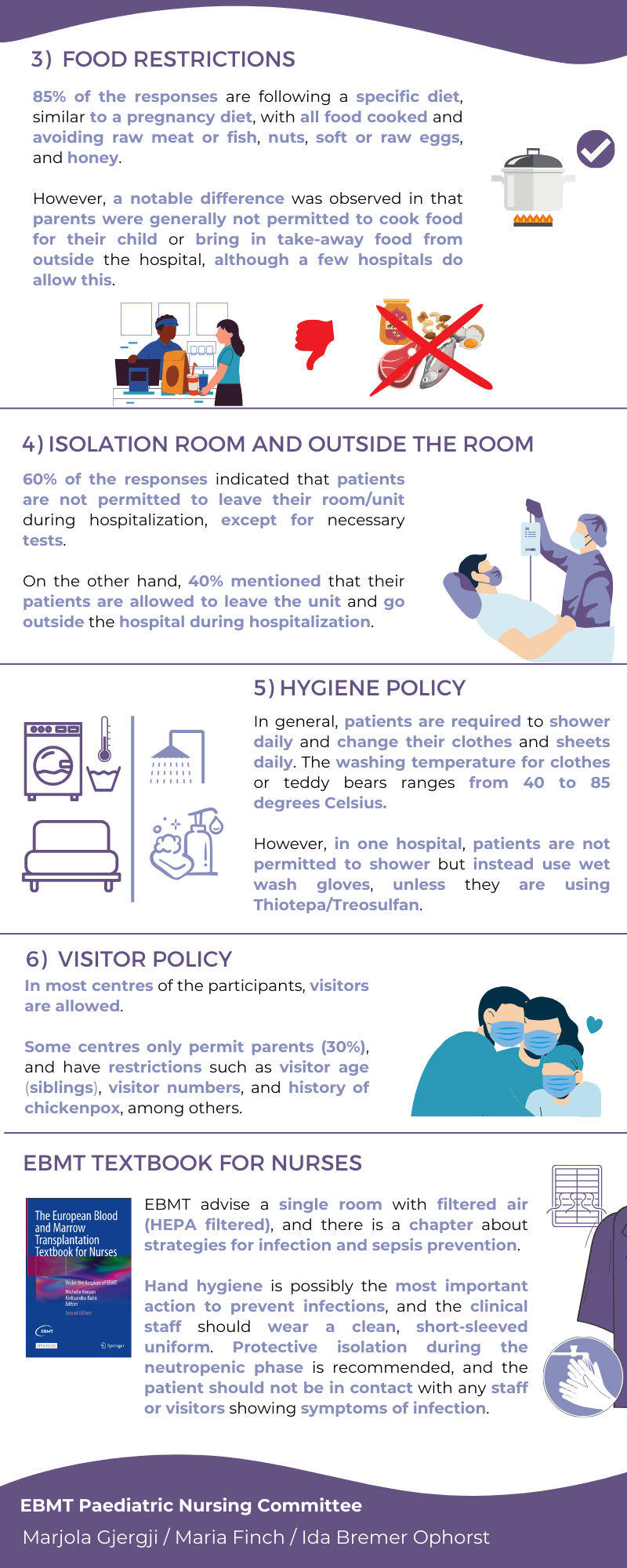
Isolation rules in HSCT
The meeting, held on 28 February 2024, convened 25 attendees from various countries including Spain, Italy, Germany, France, Denmark, UK, Belgium, Netherlands, Austria, and Indonesia. Its purpose was to empower nurses through fostering collaboration between centres and encouraging networking for professional development. Additionally, it sought to facilitate a comparative analysis of nursing practices across Europe, aiming to understand diverse approaches to care and to work towards standardising guidelines for isolation rules in HSCT.
The topics discussed regarding isolation rules were:
1. Protective Gear
2. Protective Isolation Time
3. Food Restrictions
4. Isolation Room and Outside the Room
5. Hygiene Policy
6. Visitor Policy
Here you can see a meeting summary with the main conclusions: