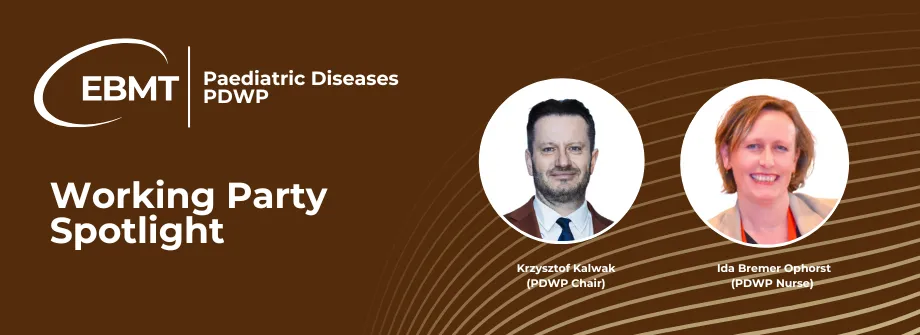
Interview with Krzysztof Kalwak (Chair) and Ida Bremer Ophorst (Nurse Representative)
Introduce yourself and your role(s) and position(s) within EBMT and outside of EBMT
Krzysztof Kalwak: I am a Professor of Medicine at Wrocław Medical University, where I serve as Head of the Department and Clinic of Bone Marrow Transplantation, Oncology and Paediatric Haematology. My clinical and scientific work focuses on paediatric haematology, stem cell transplantation, clinical immunology, paediatric oncology and related fields, in which I have published extensively.
A significant milestone in my career occurred in March 2020, when our centre became the first in Poland to administer CAR-T cell therapy to a paediatric patient with refractory acute lymphoblastic leukaemia. In 2024, in cooperation with LUMC (NL), our centre introduced haematopoietic stem cell gene therapy in a patient with RAG1-SCID. In recognition of my contributions, I was honoured in 2024 with the Knight’s Cross of the Order of Polonia Restituta and was ranked 4th in the 2024 edition of the Top 100 Most Influential Representatives of Polish Medicine.
Since April 2023, I have served as Chair of the Paediatric Diseases Working Party (PDWP) of the EBMT.
Ida Bremer Ophorst: My name is Ida Bremer Ophorst and I am a Paediatric Oncology Nurse at the Princess Máxima Centre in the Netherlands. I work on the Haematology and Stem Cell Transplantation ward, where I provide direct patient care. In addition to my clinical role, I am part of the Supportive Care research group as a nurse researcher, with a specific focus on oral care and the prevention and management of oral mucositis during treatment. I am also responsible for developing and managing nursing Standard Operating Procedures (SOPs) within the stem cell transplantation department.
Within EBMT, I have been a member of the Nursing Paediatric Committee since 2022, and for the past two years and a half, I have served as the Chair of the committee. Within this role, I am the link nurse of the PDWP.
What are the main activities - in terms of research and education - that your Working Party has been leading? And is there a memorable project that you would like to highlight?
Krzysztof Kalwak: Our Working Party has been highly active both scientifically and educationally. We currently lead a large number of multicentre studies, reflecting the strong engagement of our participating centres. This year, we reached our highest-ever Impact Factor of 85.2 (as of the end of October 2025), underscoring the growing scientific quality and visibility of our work.
A particularly memorable project for me was our Educational Meeting held in June this year in Wrocław, my home city. It brought together outstanding international experts as faculty and an impressive group of motivated young colleagues from across Europe. The atmosphere of collaboration, curiosity and mentorship made it one of our most successful educational events to date. (Read the event report).
Ida Bremer Ophorst: Over the past year, we have placed a strong emphasis on sharing knowledge among nurses. We organised and contributed to several educational events in Spain and Poland by arranging a nurses program beside the medical track, in collaboration with the Paediatric Diseases Working Party, and we played an active role in our own paediatric nursing sessions at the Annual Meeting of the EBMT. Our committee is dedicated to improving the care of paediatric and adolescent patients undergoing haematology treatments and hematopoietic cell therapy. It is truly inspiring to witness the energy and enthusiasm of participating nurses who strive to elevate clinical practice in their own centres.
On the research side, we are actively involved in a Delphi study focusing on skin toxicities, and we are contributing to a harmonisation project on the nursing care of Graft-versus-Host Disease (GvHD).
This year we also launched a new initiative: the online “How Do You Do It?” sessions. These interactive meetings invite nurses to discuss practical topics—such as central line care, isolation guidelines, and discharge procedures—using interactive tools to improve exchange of knowledge and experiences. These sessions allow colleagues to share experiences, compare protocols, and take new insights back to their hospitals.
And are you facing any challenges or trends within your field that are affecting any current/on-going projects within your Working Party?
Krzysztof Kalwak: Yes, like many international scientific groups, we work within a framework of responsible use of EBMT resources and staff time. For some activities this means prioritising which team members attend educational events and the Annual Meeting on site, while others contribute remotely and throughout the year.
For our Working Party it remains important that the core team has at least one opportunity per year to meet in person. This helps us keep the EBMT spirit alive, strengthen collaboration, foster networking and advance our projects in an efficient and collegial way.
Within this framework we focus on planning our activities so that we maintain high quality scientific output and support effective collaboration across our multidisciplinary team.
I am extremely proud of my team: my dedicated secretary, Katharina Kleinschmidt, our professional study and data manager colleagues, the statisticians from the Paris Study Unit (Jacques Emmanuel Galimard, Arnaud Dalissier and Mouad Abouqateb) and the very active and supportive members of the PDWP Board. Without them, our Working Party would not be as successful as it is today.
Despite the challenges and the additional effort, I would gladly consider a second term as Chair if the opportunity arose.
Ida Bremer Ophorst: Yes, there are several challenges. In terms of professional expertise, it is important to keep nurses informed of developments in the field of immune and gene therapy. If a centre offers this treatment, nurses must be well trained in order to provide good quality care. So sharing our knowledge about this care is essential. Another challenge of our committee is “time”. Everyone involved is highly committed, but our EBMT-related responsibilities must be balanced alongside full-time clinical roles. Developing new initiatives and organising high-quality educational programs requires a great deal of effort. At the same time, it can be difficult for nurses to attend events due to financial barriers or restrictions related to staffing and scheduling.
For that reason, it is extremely valuable that the Working Party is increasingly able to offer grants to support nurses’ participation. These grants help ensure that more colleagues can attend, learn, and share knowledge internationally.
What are your main goals in the near future?
Krzysztof Kalwak: Our goals for the near future are to continue strengthening the scientific output of our Working Party and to further expand the number and quality of our ongoing studies. We also aim to maintain and develop high-level educational activities while deepening our collaborations with other Working Parties within the EBMT—for example, by organising joint events.
Equally important to us is sustaining a strong focus on high-quality publications while fostering an atmosphere of enthusiasm, collegiality and genuine joy in working together.
Ida Bremer Ophorst: My primary goal is to continue building a strong and global network of paediatric nurses working in haematopoietic stem cell transplantation. By sharing experiences, best practices, and innovative approaches, we can significantly improve patient care across centres. Furthermore, I aim to initiate new research collaborations, including joint projects with nurses from other EBMT Working Parties, to encourage broader and more interdisciplinary perspectives.
Can you tell us what membership of your Working Party looks like? What do members of your Working Party get to do?
Krzysztof Kalwak: Membership within the Paediatric Diseases Working Party (PDWP) is structured around several dedicated sub-committees. These groups focus on specific disease areas or topics—such as AML, ALL, GVHD, gene therapy and cellular therapies—allowing members to contribute according to their expertise and interests.
In addition, we have a large and essential Clinical Trials Team consisting of highly committed volunteers who review study proposals submitted to the Working Party. They provide structured feedback using our evaluation forms, helping determine whether a project should be accepted or revised and resubmitted.
Overall, PDWP members actively contribute to shaping scientific priorities, supporting collaborative research and advancing high-quality studies in paediatric transplantation and cellular therapy.
Ida Bremer Ophorst: As link nurse and Chair of the nursing Paediatric Committee, I take part in the regular Working Party meetings, which allow me to stay informed about ongoing studies, upcoming initiatives, and the broader strategic activities of the group. Whenever a nursing perspective is needed, I contribute to relevant projects—for example, to the practice harmonisation project on GvHD nursing care.
Members of the Working Party have the opportunity to participate in educational events, contribute to research projects. We strongly encourage active involvement, as the insights and experiences of nurses are essential for advancing the quality of paediatric transplant care.
What would you like to say to encourage young investigators / trainees to join your Working Party?
Krzysztof Kalwak: We strongly encourage young investigators and trainees to join our Working Party. The PDWP is an open, collaborative and supportive environment where early-career colleagues can actively contribute and grow. One of our priorities is to integrate young members into meaningful scientific work—for example, by involving them as co-authors in major studies and publications, and by giving them genuine opportunities to take responsibility within projects.
We welcome new ideas, fresh perspectives and innovative proposals. Young investigators bring tremendous energy and creativity, and we are committed to fostering their development, helping them build networks and supporting them in becoming active contributors and future leaders within the EBMT community.