Inspectors are the backbone of JACIE; without them, there is no certification process. Becoming an inspector is a wonderful way to contribute to maintaining global quality standards. As the number of JACIE applications has increased, we are constantly looking for new inspectors to join our ranks. At the moment, we are particularly keen to hear of German, French and Spanish speaking Clinicians and Quality Managers.
Each month, you will have the opportunity to meet with one of our JACIE Inspector who will share his/her experience.
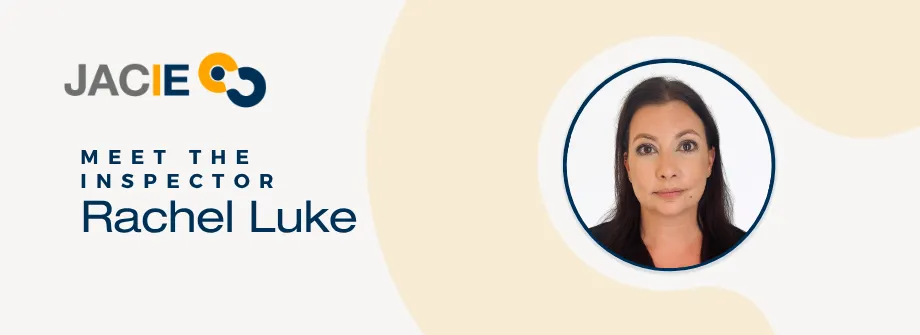
Read our interview with Rachel Luke.
Introduce yourself and your role(s) and position(s) within EBMT and outside of EBMT
I am the BMT Quality Manager at Newcastle upon Tyne Hospitals NHS Foundation Trust, where I support one of the largest haematopoietic stem cell transplantation (HSCT) and cellular therapy programmes in the UK. Our programme encompasses Adult and Paediatric Clinical Services, as well as Apheresis and Cellular Therapies.
I have worked within the NHS for 21 years and have been in my current role as Quality Manager for over eight years.
Within the EBMT and JACIE community, I have been an active JACIE Inspector for the past eight years. During this time, I have participated in numerous inspections both within the UK and internationally, and I have also had the opportunity to serve as Team Lead Inspector on several occasions. In addition, I have been a member of the JACIE Quality Managers Committee for more than two years and recently joined the JACIE Assurance Committee.
Why did you decide to become a JACIE inspector?
Having taken up the role of Quality Manager, I was presented with the unique opportunity to become our centre’s first JACIE Inspector. With the support and encourgaement of our centre, I was keen to embrace the role as I saw it as an excellent opportunity to expand my knowledge and gain a deeper understanding of the certification process.
I was keen to learn more about how inspections are conducted, what inspectors look for, and how different centres interpret and implement the JACIE Standards. I felt that becoming an inspector would not only support my own professional development but would also bring valuable experience back to my organisation.
Looking back, it has proven to be one of the most rewarding professional decisions I have made. It has provided me with a broader perspective of quality management and has enabled me to learn from a wide variety of centres, inspectors and healthcare systems.
What has been the most memorable inspection that you have ever done?
It is difficult to select just one inspection because every inspection has been memorable in its own unique way. Each centre has its own culture, challenges, strengths, and examples of good practice, so there is always something new to learn.
If I had to choose one, I would say an inspection I participated in in Germany. It was my first inspection outside of the UK, which made it especially memorable. It was fascinating to see how another healthcare system operated while maintaining compliance with the same internationally recognised standards.
The inspection team worked exceptionally well together, creating a supportive and collaborative atmosphere throughout the process. The centre itself could not have made us feel more welcome, and there was a genuine sense of openness and engagement from everyone involved. The experience reinforced how JACIE certification brings together professionals from different countries with a shared goal of improving quality and patient care. The only challenge was the unexpected heatwave we experienced during the visit, which certainly made it even more memorable!
What ‘keys to successful JACIE certification’ can you share with us?
One of the most important things for centres to understand is that JACIE certification is a continuous process. Certification should not be viewed as something that only becomes important in the months leading up to an inspection. Instead, the standards should be embedded within daily practice and continually reviewed and improved.
Strong leadership and engagement from all members of the programme are essential. Successful certification requires commitment from clinical, collection, processing, and quality teams alike. Everyone has a role to play and a responsibility for maintaining compliance with the standards.
Effective communication is also critical, particularly within larger programmes that operate across multiple teams, departments, or geographical sites. Ensuring that information is shared consistently and that staff understand both their own responsibilities and the wider objectives of the programme can make a significant difference.
Finally, centres should recognise the value of quality management as a tool for continuous improvement rather than simply a regulatory requirement. A strong quality culture helps organisations not only achieve certification and re-certification but also enhance patient safety, staff engagement, and overall service quality.
How has your career/work benefited from being a JACIE inspector?
The experience, skills, and knowledge I have gained through being a JACIE Inspector have undoubtedly benefited me in my role as a Quality Manager. The opportunity to observe how different centres approach quality management, governance, and compliance has broadened my understanding and provided valuable insights that I have been able to apply within my own organisation.
Being an inspector has strengthened my knowledge of the JACIE Standards and their practical implementation. It has also improved my auditing, assessment, communication, and leadership skills, all of which are invaluable in my day-to-day role.
Perhaps one of the greatest benefits has been the opportunity to work alongside highly experienced inspectors from different professional backgrounds and countries. Through these interactions I have gained countless practical ideas, examples of good practice, and valuable lessons that have helped me continually develop both professionally and personally.
Do you have any tips or advice for anyone who aspires to become a JACIE Inspector?
Absolutely. My first piece of advice would be to sign up and attend one of the JACIE Inspector Training Courses. These courses provide an excellent introduction to the inspection process and offer valuable insights from experienced inspectors. They are a great way to build confidence and understand what the role involves.
I would also encourage anyone considering becoming an inspector to be open to learning and embracing new experiences. Every inspection presents an opportunity to gain knowledge, meet new colleagues, and observe different approaches to delivering high-quality transplant and cellular therapy services.
Being a JACIE Inspector is a unique and rewarding experience. Not only does it support your own professional development, but it also benefits your centre by bringing back new ideas, perspectives, and examples of best practice. It is an excellent way to contribute to the wider transplant and cellular therapy community while helping to promote and maintain high standards of patient care across the field.