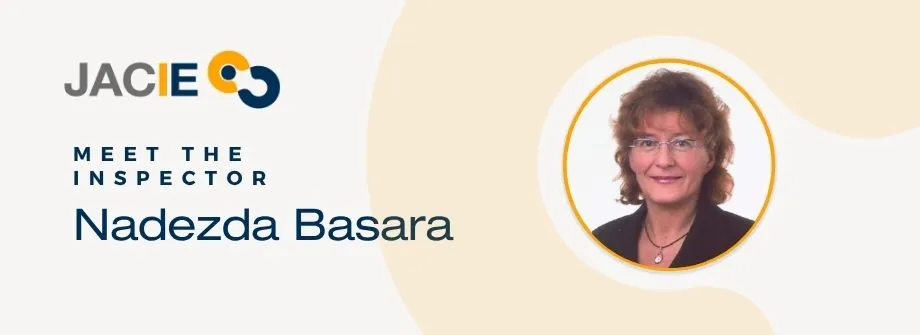
Inspectors are the backbone of JACIE; without them, there is no certification process. Becoming an inspector is a wonderful way to contribute to maintaining global quality standards. As the number of JACIE applications has increased, we are constantly looking for new inspectors to join our ranks. At the moment, we are particularly keen to hear of German, French and Spanish speaking Clinicians and Quality Managers.
Each month, you will have the opportunity to meet with one of our JACIE Inspector who will share his/her experience.
Read our interview with Nadezda Basara.
Introduce yourself and your role(s) and position(s) within EBMT and outside of EBMT
I learned how to perform transplants in 1986 and 1987 in Montreal, Canada. After that, I have worked in the field of stem cell transplantation. From 1996, I was Senior Physician for allogeneic stem cell transplantation in Idar-Oberstein and at the University of Leipzig. I have worked within the Acute Leukaemia Working Party of EBMT. From 2011 until 2023, I was Director of a department for internal medicine and Head of the stem cell transplantation programme in Flensburg, and I remained part of the team in Flensburg until 2025. Since then, I have been Senior Medical Adviser at the first and oldest stem cell bank in Germany, Stefan Morsch Stiftung.
Why did you decide to become a JACIE inspector?
I participated in the JACIE training course in 2006 in Frankfurt, Germany, to learn more about FACT and JACIE standards and to prepare for the inspection at the University of Leipzig. In addition, after 20 years serving as an inspector, I am sure that the inspection should be "in our hands" because we are experts in the field and have the necessary know-how. The team working with quality management in our hospitals is very important and beneficial for the stem cell programme. As a JACIE inspector, I have seen how the team functions and have also experienced a great deal of professional exchange.
What has been the most memorable inspection that you have ever done?
Every inspection is truly unique. My first inspection was in 2009 in Wiesbaden, at that time with approximately 100 allogeneic HSCTs per year. I have inspected different areas such as the clinical unit, stem cell collection, quality management and so on. I remember the inspection at Northampton General Hospital, Great Britain. The team of inspectors was very large, with six inspectors and two trainees, because the centre had three sites to inspect. The team leader was from Italy, a very experienced and active JACIE inspector. Although stressful, it was a very positive experience for me.
What ‘keys to successful JACIE certification’ can you share with us?
The most important key to successful JACIE certification is to prepare in advance of the inspection, to review the documents and to obtain them before the inspection if they are not downloaded. When you are well prepared, during the on-site inspection, check if the standard written on paper has been implemented in daily practice. A good atmosphere and open exchange between inspectors and the team is very important.
How has your career/work benefited from being a JACIE inspector?
The exchange with colleagues in Germany and internationally has always been helpful in improving the implementation of standards in my hospital and stem cell unit. A very important aspect is also the quality of the data delivered to the EBMT Registry. During inspections, it is very common to find incorrect data in the EBMT Registry, sometimes only typographical errors, sometimes misinterpretation of MAC or RIC conditioning regimens. After each inspection, I have checked our own data because of its importance. For retrospective analysis using EBMT data, the quality of the data is important for our transplant community.
Do you have any tips or advice for anyone who aspires to become a JACIE Inspector?
Become a JACIE inspector! Do not be afraid of the amount of work you have to do within two weeks after the inspection. You will meet a very motivated team taking care of transplant patients. An international audit system is a very important and objective tool for evidence-based patient care. In addition, it is an incredible experience to work with other inspectors and to meet new transplant physicians.