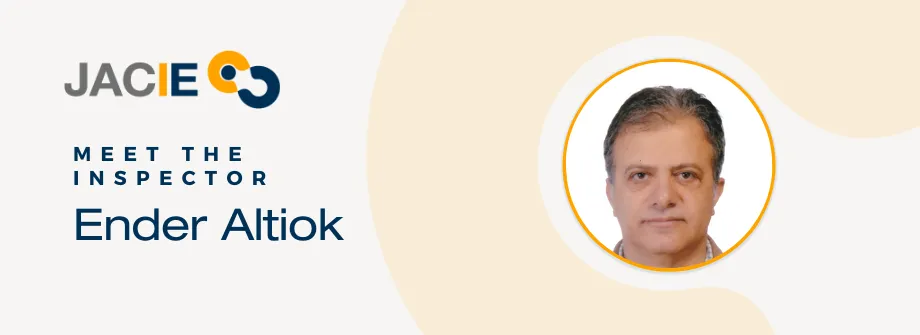
Inspectors are the backbone of JACIE; without them, there is no certification process. Becoming an inspector is a wonderful way to contribute to maintaining global quality standards. As the number of JACIE applications has increased, we are constantly looking for new inspectors to join our ranks. At the moment, we are particularly keen to hear of German, French and Spanish speaking Clinicians and Quality Managers.
Each month, you will have the opportunity to meet with one of our JACIE Inspector who will share his/her experience.
Read our interview with Ender Altiok.
Introduce yourself and your role(s) and position(s) within EBMT and outside of EBMT
I am a medical geneticist based in Istanbul, currently serving as a consultant to a cell processing facility and as a university instructor. Since 2005, I have been a JACIE inspector for both processing facilities and quality management. I am also a proud member of the JACIE Assurance Committee (JAC).
Why did you decide to become a JACIE inspector?
I mainly wanted to bridge the gap between laboratory practice and international clinical standards, with the primary motivation of improving patient safety and therapy efficacy. I established and licensed a GMP laboratory for the development and production of genetic and cellular medicinal products in 2004. I experienced the complexities of these processes first-hand. When I contacted JACIE for accreditation in 2005 and was subsequently invited to the inspector course, I realised that the peer-review system is the most effective way to ensure global harmonisation through the international exchange of expertise.
What has been the most memorable inspection that you have ever done?
I have enjoyed every inspection, and for me, the most memorable part is not a single event but the transformation of the atmosphere. Visits usually start with a certain level of stress for both the inspector and the site, but that tension quickly fades once a collegial interaction is established, shifting the focus from catching mistakes to collaborative problem-solving, often turning a formal audit into professional friendships and even scientific collaborations.
The virtual inspection during the COVID pandemic was a particularly special and challenging experience. Spending three full days conducting a deep-dive audit through a screen was exceptionally demanding. Overcoming those technical hurdles was incredibly educational and actually made subsequent on-site visits much more efficient. Beyond the technical work, getting to know the local culture, the people and the food of each city adds a rich layer to the inspection journey.
What ‘keys to successful JACIE certification’ can you share with us?
Success is about establishing a sustainable culture of quality rather than simply preparing for a one-off exam. It should start with leadership that moves the team from reactive compliance to a proactive commitment to patient safety. Accreditation fails if only the Quality Manager knows the standards; deep staff engagement is vital. To keep the system healthy, frequent multidisciplinary meetings are necessary to analyse deviations and reinforce a culture of safety. Rigorous internal audits are important; waiting for the official inspection to reveal gaps is risky. During the visit, transparency is vital. It is much better to show how a mistake was fixed than to claim perfection.
Relying only on a hospital quality manager who may lack the specialised cellular therapy context is often ineffective. Also, many believe that Good Manufacturing Practice (GMP) compliance automatically satisfies JACIE requirements. While GMP compliance is a great start for product quality, JACIE is broader; it oversees the entire clinical continuum, from patient selection to long-term follow-up. JACIE requires a tailored programme designed for the complexities of transplantation that bridges the gap between the laboratory and the bedside.
From an evaluative standpoint, the process works best when the inspector provides objectivity and guidance, treating the audit as a peer review rather than an interrogation. The goal is to help the centre improve while maintaining the integrity of the accreditation. This requires clear communication, effective time management to prioritise high-risk areas like labelling, and actionable reporting that cites specific standards to help the centre reach its full potential.
How has your career/work benefited from being a JACIE inspector?
As always after an inspection, I have gained insights into different styles of problem solving and laboratory management.
Being in the JACIE environment helped me understand the regulatory side of cellular therapy and genetics beyond the laboratory. I have had the opportunities to contribute to quality standards globally by participating in European Foundation for Quality Management (EDQM) working groups.
Locally, I have served as a member of commissions in national regulation committees and as an EU technical support expert for the harmonisation of human tissues and cells in Türkiye.
Do you have any tips or advice for anyone who aspires to become a JACIE Inspector?
Highly recommended! The inspector role is a continuous learning journey. Engaging in the exchange of best practices allows for the creation of a mental library of solutions that brings strategic value to your own institution. This role facilitates accelerated career advancement and strategic networking by connecting you to a global community of experts.