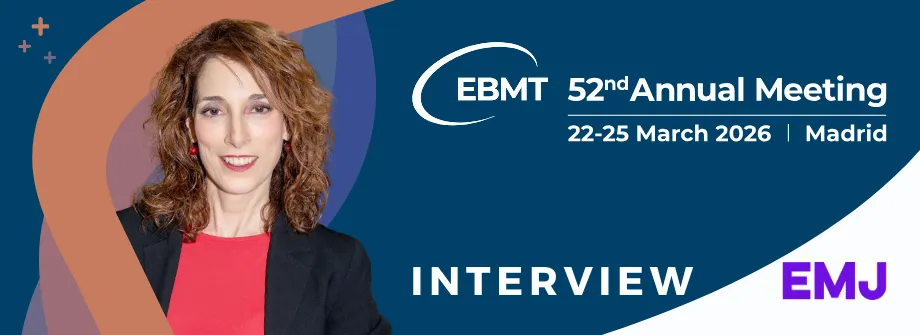
- Could you tell us about your personal journey and how financial discrimination has affected you as a cancer survivor?
I am a journalist, and when I was diagnosed with leukaemia in December 2013, I was presenting a morning magazine programme on a regional television channel. My life changed completely overnight.
After months of chemotherapy, in June 2014, I underwent a bone marrow transplant. I was 36 years old. Like many transplant patients, recovery was not immediate. There were complications and a long process of rebuilding my health and my life. When I finally recovered and was able to move forward, I decided to buy an apartment. I truly believed the hardest part was behind me.
That was when I encountered something I had never anticipated: financial discrimination. When I applied for a loan, several banks refused to offer me life insurance once they learned that I had previously had cancer. And although life insurance is not legally mandatory to obtain a mortgage, in practice, banks require it.
Eventually, I was granted the mortgage, but with a higher interest rate than someone with the same financial profile would normally receive. The only difference was my medical history.
For me, this was a clear example of how cancer can continue to affect survivors long after treatment has ended. Surviving the disease should mean being able to move forward with your life, but sometimes society and financial systems are not yet prepared to see survivors as people with a future rather than a risk.
- When did you first become aware of the ‘Right to Be Forgotten’, and what does this policy represent to you?
I became aware of the need for the ‘Right to Be Forgotten’ when I realised that financial discrimination was not an isolated situation, but a very common practice. I discovered that many survivors faced the same barriers, even people who had had cancer as children.
Patient organisations had been advocating for this right for many years. And not only in relation to financial services, but also for access to different types of insurance, such as private health insurance or life insurance. In some cases, the consequences even extend to everyday rights. For example, in Spain, many cancer survivors can only renew their driving license for 3 years instead of the standard 10 years, simply because they once had cancer.
To me, the ‘Right to Be Forgotten’ represents something very important: fairness. Cancer should not become a lifelong penalty that continues to affect people long after they have recovered.
After a certain number of years without recurrence, survivors should not be forced to disclose their past illness when applying for financial products such as insurance or loans. It is about recognising that survivorship means moving forward and rebuilding your life, not being permanently defined by a disease that belongs to your past.
- How do you think organisations such as the EBMT can play a stronger role in advocating for the ‘Right to Be Forgotten’ and supporting cancer survivors facing financial discrimination across Europe?
Organisations such as the EBMT have a very important role to play because they combine scientific expertise with a deep understanding of the long-term realities of survivorship. They can help raise awareness among policymakers and institutions about the barriers that many cancer survivors still face when trying to reintegrate fully into society. Advocacy from scientific and medical organisations is powerful because it brings evidence and credibility to the conversation and helps translate patients’ experiences into policy change.
They can also promote more research and dialogue around survivorship, not only focusing on medical outcomes but also on social and financial wellbeing. Respecting the ‘Right to Be Forgotten’ is not just a legal matter; it is also about quality of life. When survivors are treated fairly by financial and insurance systems, it allows them to rebuild their lives with dignity and stability.
Another important aspect is ensuring that this right is applied fairly to all cancer survivors, including people living with chronic oncohaematological diseases. Some conditions, such as certain leukaemias, may be chronic but compatible with a long and stable life. These patients should not be excluded from protections that are meant to prevent discrimination.
Ultimately, organisations like the EBMT can help ensure that survivorship policies reflect not only medical progress, but also the real-life needs and rights of patients across Europe.
- What challenges did you face when seeking financial services such as insurance or loans after your treatment?
The main challenge was access to life insurance. Several banks simply refused to offer it once they learned about my cancer history. This creates a paradox: legally, you may not be required to have life insurance to obtain a mortgage, but in reality, most banks make it a condition for approving the loan.
In my case, as I said before, the mortgage was eventually approved, but under less favourable conditions, with a higher interest rate than someone with the same financial profile would normally receive.
I also experienced something similar with private health insurance. I had been paying for a private health insurance policy for around 10 years and had barely used it. However, when I was diagnosed with leukaemia, the company decided to increase my premium even though I was being treated and hospitalised in a public hospital.
Experiences like this made me realise how invisible and normalised this type of discrimination can be. Many survivors may not even realise that their medical history is the reason behind these barriers.
- How do you think financial discrimination impacts the long-term wellbeing and recovery of cancer survivors?
Cancer is already a disease that often leads to financial hardship. During treatment, many patients spend long periods on sick leave or are unable to work, which directly affects their income and financial stability.
In addition, surviving cancer does not mean that all the consequences disappear. Many survivors need long-term support to deal with the physical and emotional effects of treatment. And many of these services are still not widely available within public healthcare systems. As a result, patients often have to pay out of pocket for specialists such as psychologists, physiotherapists, nutritionists, trainers, pelvic floor therapists, sexologists, etc.
If you add financial discrimination to this situation, difficulties accessing insurance, loans, or fair financial conditions, the impact is devastating. When financial institutions treat survivors as permanently high-risk individuals, it sends a very discouraging message: cancer will always follow you. This has a significant psychological and social impact because it reinforces the feeling that the disease never truly disappears from your life. Cancer survivors should be supported in rebuilding their lives, not face additional barriers that make recovery even harder.
- What changes would you like to see across Europe to better protect survivors from financial discrimination?
First, I would like to see a harmonised implementation of the ‘Right to Be Forgotten’ across all European countries. Currently, the rules and waiting periods vary significantly from one country to another.
Second, transparency and accountability from financial institutions are essential. Survivors should not have to navigate opaque systems where discrimination happens indirectly.
And finally, better information for patients. Many survivors simply do not know that these rights exist or how to enforce them.
- What message would you share with policymakers and healthcare professionals about the importance of addressing this issue?
My message would be simple: surviving cancer should not mean facing lifelong social or financial consequences.
Medical progress has dramatically increased survival rates. Now we must ensure that survivors can fully reintegrate into society without hidden barriers.
Addressing financial discrimination is not just a financial issue. It is a matter of dignity, equality, and quality of life for millions of cancer survivors across Europe.